Contractors: Metal Roof Deck Types for Slope, Run Length, and Delivery
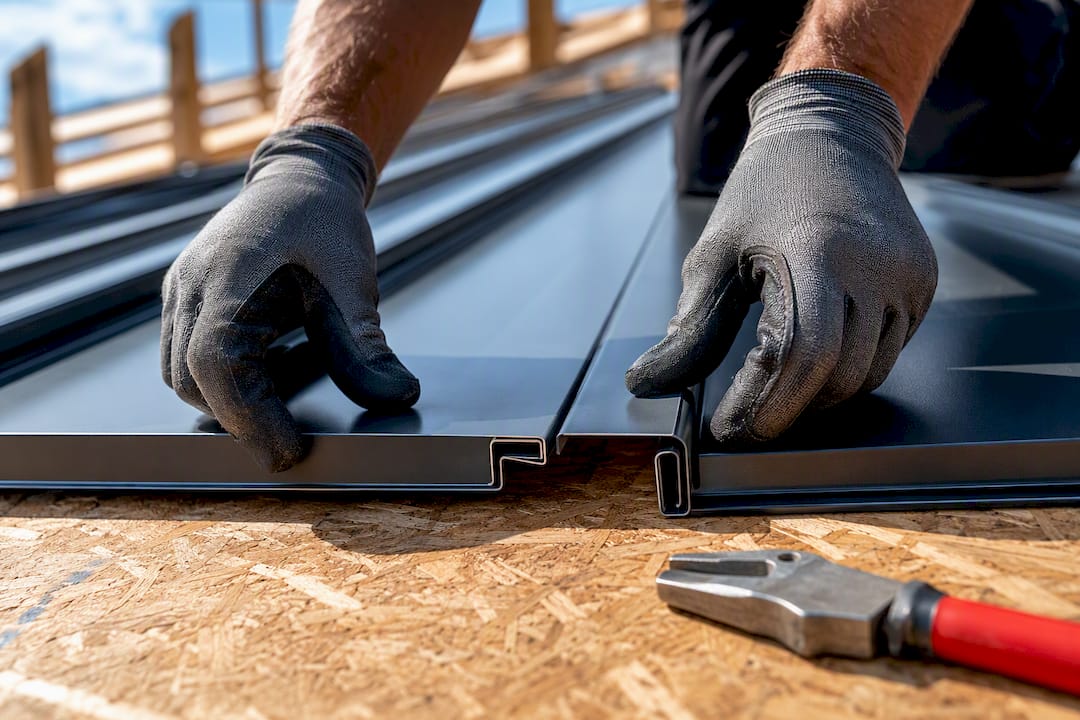
Seam and panel guidance for contractors. Match snap-lock or mechanical seam to slope, run length, wind ratings, and delivery method to avoid rework.
Standing-seam roofs fall into two contractor-relevant families: snap-lock panels for steep slopes and faster installs, and mechanically seamed panels for low-slope planes, long runs, or high-wind jobs. The rule of thumb is simple: default to snap-lock at 3:12 or steeper, and switch to mechanical seam below that threshold or whenever uplift and water tightness matter more than labor speed. Mechanical seam usually means budgeting for a seaming pass, either rented equipment or a pre-seamed run from your supplier.
TL;DR:
- Mechanical seam panels are preferable for slopes below 3:12 or high-wind locations, but they cost 10 to 15 percent more than snap-lock systems.
- Snap-lock panels are typically specified at 3:12 or steeper, while mechanical seams can be rated down to 1/4:12 with continuous in-seam sealant.
- Long continuous runs and projects near salt exposure or high wind zones benefit from on-site roll forming to reduce waste and transportation issues.
- Accurate slope measurement and detailed uplift data are essential before ordering panels, especially for low-slope or mixed-slope roofs.
- Contractors should request specific ASTM E1592 or UL uplift ratings for the chosen profile, gauge, and clip spacing to ensure performance matches expectations.
Table of Contents
- What Are the Main Metal Roof Deck Types for Standing Seam?
- Which Panel Profiles, Seam Styles, and Gauges Should You Specify?
- How Do You Choose the Right Deck Type Before You Order?
- Cut-and-Drop or On-Site Roll Forming: Which Fits Your Job?
- Why Slope Math Gets Ignored More Than It Should
- Get a Fast Quote on Custom-Length Panels
- Sources
- FAQ
What Are the Main Metal Roof Deck Types for Standing Seam?
Snap-lock and mechanically seamed panels behave differently on the roof, and that difference drives almost every spec decision a contractor makes. Snap-lock panels interlock by hand or with a hand tool, using a male and female leg that click together without a separate seaming step. Mechanically seamed panels start with a raw, unlocked edge that gets folded over with a powered or hand seamer, either single-folded (180 degrees) or double-folded (360 degrees) for maximum water resistance.
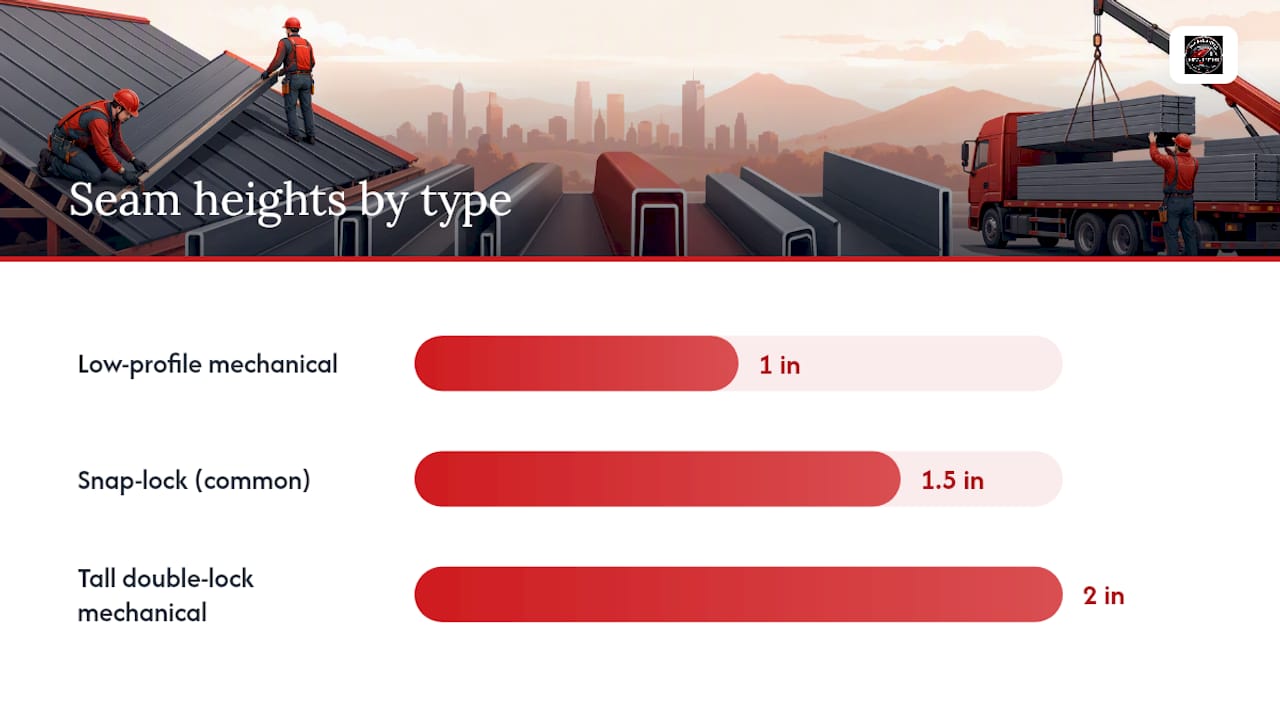
Seam heights typically run from 1 inch on lower-profile mechanical lock systems up to 2 inches on tall double-lock profiles, with 1.5 inches common on snap-lock. Taller seams shed water better on low slopes because they give wind-driven rain more vertical distance to climb before it reaches the deck.
The published slope minimums matter as much as the seam mechanics. IRC R905.10.2 sets 3:12 for lapped, non-soldered metal panels without lap sealant, drops to 1/2:12 with applied lap sealant, and allows standing-seam systems as a category down to 1/4:12. In practice, snap-lock is typically specified at 3:12 or steeper, while mechanically seamed profiles can go as low as 1/4:12 depending on seam height and continuous in-seam sealant.
Quick reference: Snap-lock: 3:12 minimum, typical. Mechanical seam: can be specified for slopes down to 1/4:12 on select tall profiles with sealant, per IRC R905.10.2.
The tradeoffs beyond slope come down to wind performance and labor cost:
- Mechanical seam panels generally carry stronger published uplift ratings and are the safer default for corner and edge zones in coastal or high-exposure sites.
- Snap-lock panels can meet uplift requirements in many residential wind zones when clip spacing and gauge are specified correctly, but engineers often push toward mechanical seam once you’re near ASCE map thresholds.
- Installed cost runs 10 to 15 percent higher for mechanical seam than snap-lock, mostly from seaming equipment and slower crew pace.
- Snap-lock saves real labor time on steep residential roofs where the decision is largely driven by slope and schedule, not performance ceilings.
The most common warranty callback isn’t a bad panel. It’s a snap-lock system specified on a marginal slope that needed mechanical seam from the start.
Which Panel Profiles, Seam Styles, and Gauges Should You Specify?
Four seam styles cover almost every job you’ll spec: double-lock seam, symmetrical seam, one-piece snap-lock interlock, and two-piece snap-lock interlock. Each shows up on the same basic decision tree contractors already use for slope and wind.
- Double-lock seam folds twice for maximum weathertightness. It’s the go-to for low-slope commercial work and coastal exposures.
- Symmetrical seam looks identical from either side of the panel, which matters on architectural projects where sightlines run both directions off a ridge or hip.
- One-piece snap-lock interlock is the fastest field install. Legs snap together without a separate seamer, which is why it dominates steep residential retrofits.
- Two-piece snap-lock interlock separates the male and female legs into distinct pieces for slightly better panel alignment on longer runs, at a small labor cost over one-piece.
Rib profile is a separate choice from seam style. Trapezoidal ribs read as more traditional and hide minor waviness better than flat pan panels. Tee-rib and striated profiles show off cleaner sightlines on architectural facades but reveal oil-canning more readily on wide, flat pans. Panel widths commonly run 12, 16, and 18 inches, with narrower widths reducing oil-canning risk on projects where the owner is picky about reflections.
Gauge selection is where a lot of first-time specifiers get it wrong. 24-gauge steel is the standard for commercial roofs, long spans, and anywhere wind uplift or foot traffic during maintenance is a real concern. 26-gauge is lighter, cheaper, and perfectly adequate for most residential steep-slope work where spans are shorter and clip spacing is tighter. For coastal Virginia and Maryland jobs with salt exposure, ask about coating packages and consider architectural-grade standing seam systems built for that environment rather than a stock residential coil.
How Do You Choose the Right Deck Type Before You Order?
Get the slope measurement right before anything else. A roof that reads as 3:12 on paper can have marginal planes, dormers, or low-slope porch roofs tied into the main field that actually sit below 3:12. Those planes force a mechanical seam call even when the rest of the roof qualifies for snap-lock.
Run through this checklist before you place an order:
- Measure every plane separately. Don’t assume the dominant roof slope applies to every section, especially additions, porches, and dormers.
- Pull the design wind speed for the site from local code or the ASCE wind map and match it against the panel’s published uplift data.
- Confirm run length. Longer continuous runs increase thermal movement and may push you toward a taller seam or a different clip system.
- Lock in panel gauge and clip spacing together. A wider clip spacing on 26-gauge panels in a high-wind zone is a common failure point.
- Request test data. Ask your supplier for ASTM E1592 load tables or UL uplift ratings specific to the exact profile and gauge you’re ordering, not a generic brochure number.
- Order trim and flashing as a package, matched to the panel profile, not sourced separately.
Pro Tip: Some profiles can run either snap-lock or mechanically seamed off the same tooling, which is worth asking about if your project has mixed-slope planes and you want one panel family for the whole roof instead of splitting the order. Systems like these, detailed by New Tech Machinery, give you flexibility without a second procurement conversation. For jobs where warranty terms matter as much as slope, review mechanical-lock standing seam specs before finalizing the order.
Cut-and-Drop or On-Site Roll Forming: Which Fits Your Job?
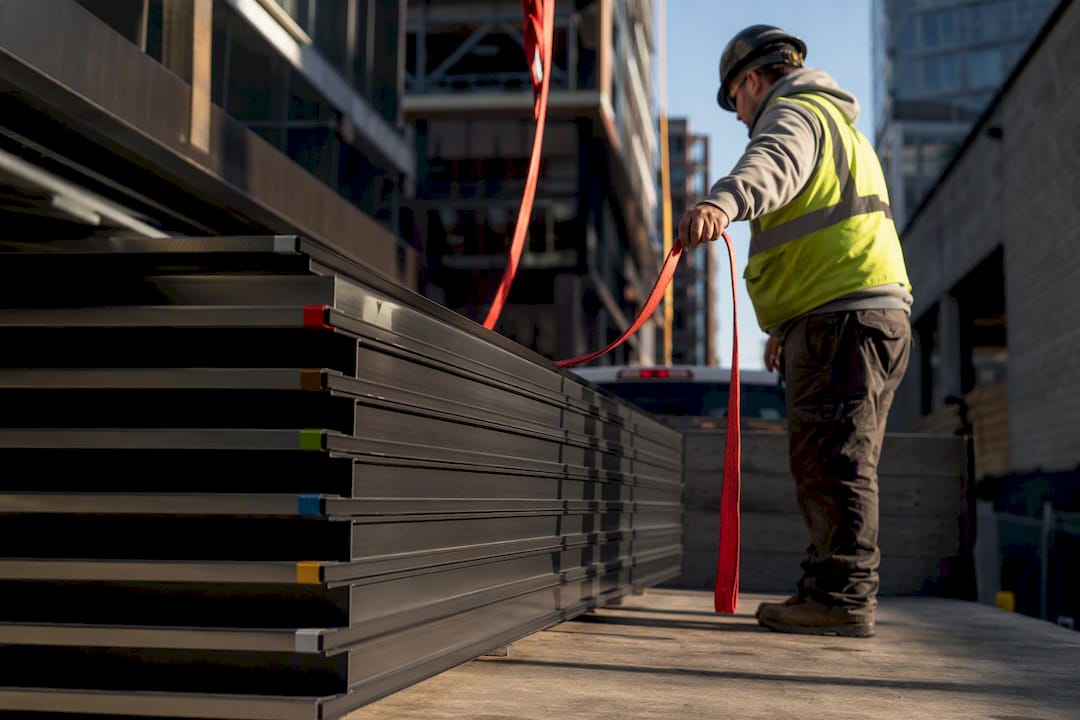
Cut-and-drop delivery means panels arrive pre-cut to your exact run lengths, ready to lift onto the deck. It cuts waste sharply on jobs with defined, stable measurements, and it eliminates the need to store or protect long coil stock on a tight urban lot. Pre-marked, labeled panel runs also speed installation because crews aren’t sorting through unmarked stacks trying to match panel to plane.
On-site roll forming earns its place on a different kind of job: very long continuous runs where a seamless panel avoids end-lap joints entirely, or projects where field measurements keep shifting and you can’t commit to exact lengths weeks in advance. It requires staging space for the roll former, a clear path for extremely long panels off the machine, and crew trained on the equipment.
Seam choice changes your tooling plan either way:
- Snap-lock jobs need minimal extra equipment beyond hand seamers for detail work.
- Mechanical seam jobs need a powered seamer on-site, plus a plan for who operates it and when it arrives relative to panel delivery.
- Long mechanical-seam runs benefit most from on-site panel manufacturing since it avoids transporting oversized finished panels on a flatbed.
- Coordinate trim and flashing delivery with panel delivery. A mismatched arrival is the single most common cause of a callback that has nothing to do with the panel itself.
Weather windows matter here too. Cold-weather installs change sealant cure times and crew pace, a factor worth planning around before you commit to a tight schedule on a low-slope mechanical-seam job.
Why Slope Math Gets Ignored More Than It Should
Most contractors know the 3:12 rule for snap-lock. What surprises people is how often that rule gets applied to the dominant roof plane and then quietly ignored on the porch roof, the dormer, or the low-slope tie-in that got added during framing. That’s not a knowledge gap. It’s a measurement discipline gap, and it’s the single most preventable source of leak calls on standing-seam jobs.
The other underrated factor is procurement timing. Contractors who order mechanical-seam panels the same way they order snap-lock, without confirming seamer availability or on-site roll forming lead time, end up with panels sitting on a lift while the crew waits on equipment. Slope selection and logistics selection are the same decision, not two separate ones, and treating them separately is where schedules slip.
If there’s one place the industry could tighten up, it’s uplift documentation. Too many quotes still reference generic profile data instead of ASTM E1592 numbers tied to the exact gauge and clip spacing being installed. Ask for the specific numbers every time. A panel that performs well in one gauge and clip configuration can fail well below its rated wind speed in another.
— Matt Catino
Get a Fast Quote on Custom-Length Panels
Custom metal roofing panel suppliers often provide guidance on seam selection based on slope and wind conditions. It is common for manufacturers to offer 24-gauge and 26-gauge steel panels in various seam styles and custom lengths to reduce on-site trimming and avoid delays.
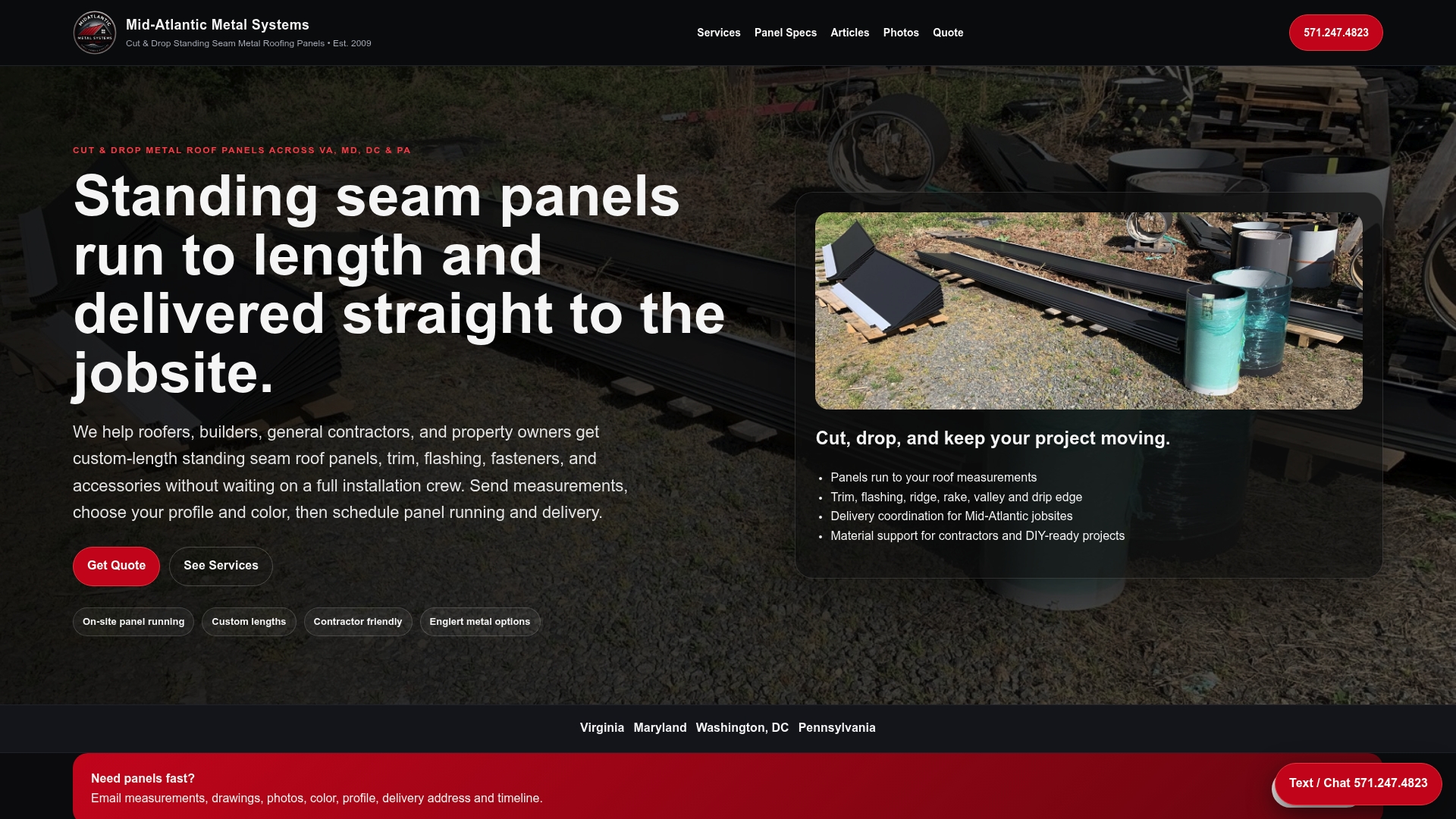
For a fast quote, have your slope, run lengths, panel profile, gauge preference, and rough timeline ready. We’ll tell you straight which seam type fits your wind zone and whether cut-and-drop or on-site roll forming makes more sense for your schedule. Contractors across Virginia, Maryland, Washington DC, Pennsylvania, and West Virginia work with us directly on architectural standing seam panels, custom trim and flashing packages, and full contractor supply support. Reach out with your project specs and we’ll get a delivery estimate back to you fast.
| What you need | Best next step |
|---|---|
| Quick quote on panels or trim | Submit project specs for a takeoff estimate |
| Long-run mechanical seam job | Ask about on-site roll forming availability |
| Coastal or high-wind project | Request ASTM E1592 data for your exact profile |
| Visual reference before ordering | Browse the project gallery |
Sources
- Snap Lock vs Mechanical Seam: Slope, Cost, Wind | TRB
- Standing seam roofs: snap-lock vs. mechanical-seam profiles
- A guide to selecting the right metal roof panel | MBCI
FAQ
What Slope Requires Mechanical Seam Instead of Snap-Lock?
Snap-lock is typically specified at 3:12 or steeper; below that, mechanically seamed panels are the standard choice, with some tall profiles rated down to 1/4:12 under IRC R905.10.2 when continuous in-seam sealant is used.
Is 24-Gauge or 26-Gauge Better for Standing Seam?
24-gauge suits commercial roofs, long spans, and high-wind zones, while 26-gauge is standard and cost-effective for most residential steep-slope installs with shorter spans and tighter clip spacing.
Does Mechanical Seam Cost More to Install Than Snap-Lock?
Yes, mechanical seam typically adds 10 to 15 percent to installed cost compared with snap-lock, driven mainly by seaming equipment and slower crew pace on the seam pass.
What’s the Difference Between Cut-and-Drop and On-Site Roll Forming?
Cut-and-drop delivers panels pre-cut to your run lengths for immediate install, while on-site roll forming produces panels directly on the jobsite, best suited to very long runs or projects where measurements keep changing.
What Test Data Should I Request Before Ordering Panels?
Ask your supplier for ASTM E1592 load tables or UL uplift data specific to the exact panel profile, gauge, and clip spacing you’re ordering, not generic brochure figures.