Open vs Closed Valleys: What Roofing Contractors Should Know
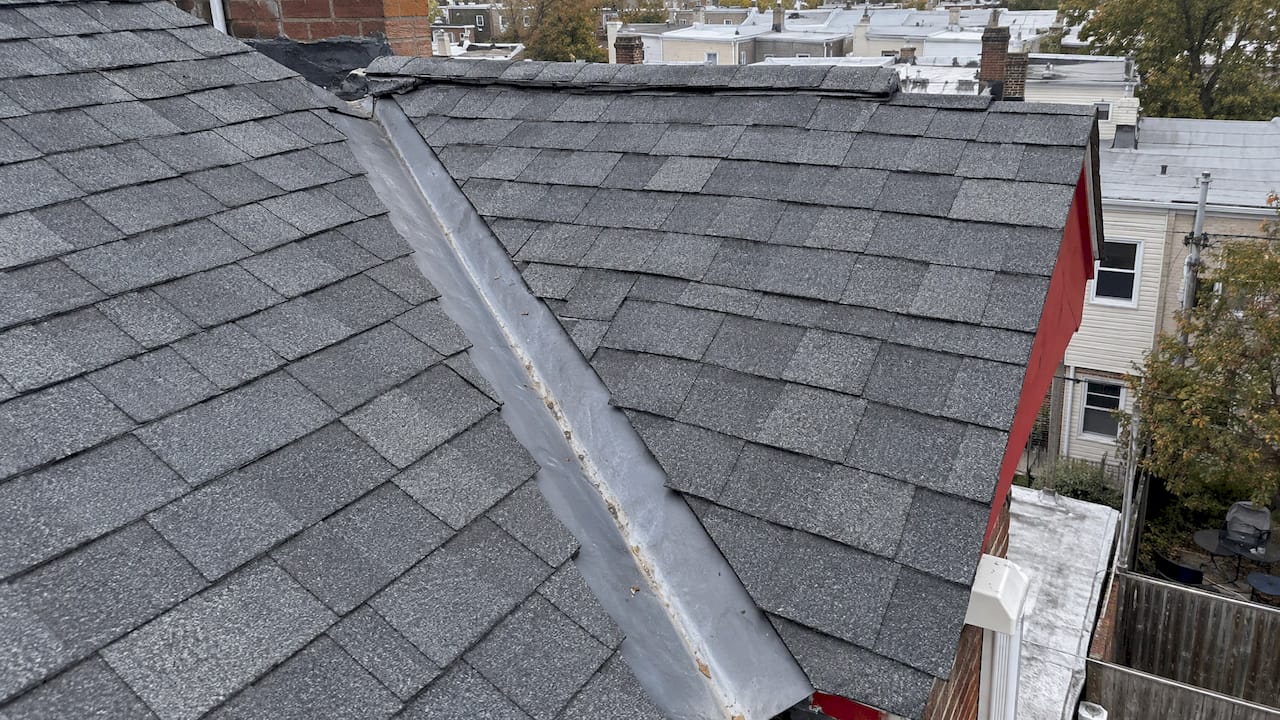
Open vs closed valley, explained for contractors: how each is built, underlayment and metal specs, slope limits, code checks and where metal panels fit.
An open valley leaves a strip of metal exposed down the center of the valley. A closed valley covers the valley with shingles. For laminated architectural shingles, the major manufacturers and the NRCA point contractors toward open or closed-cut valleys, and the NRCA specifically recommends open valleys for high-profile architectural shingles and for valleys at 4:12 or less. On a metal roof, the valley is a metal-lined channel with panels cut back from the center line. That makes the valley metal, its gauge, its width and the underlayment beneath it the details that decide whether the roof stays dry.
This guide covers both valley types, what each takes to build, the underlayment that sits under them, how they compare, and what to check before you order material. It is written for contractors and builders, so it skips the homeowner basics.
TL;DR
- Open valley: corrosion-resistant metal over valley underlayment, with the roofing held back from the center line to leave a clear water channel. The NRCA recommends it for high-profile architectural shingles and valleys at 4:12 or less.
- Closed valley: shingles cover the valley (woven or closed-cut). It costs less up front and finishes cleaner, but sheds ice and water more slowly.
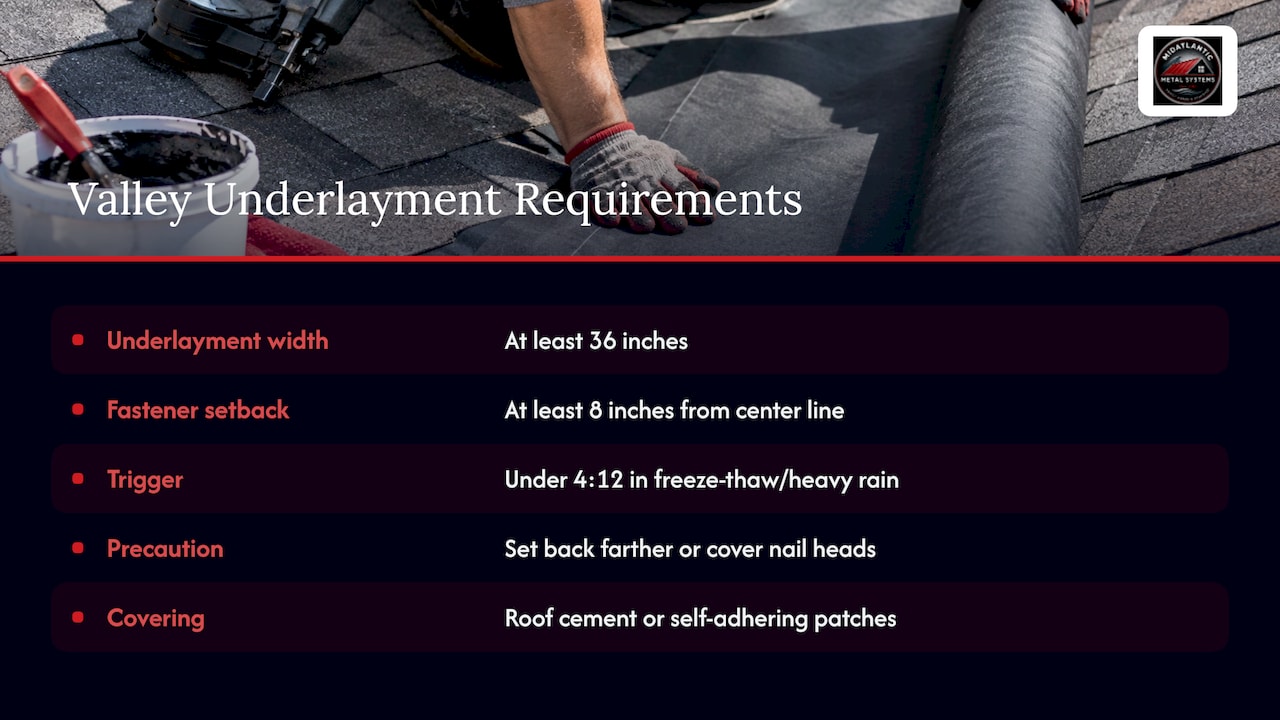
- Underlayment: the NRCA calls for at least 36 inches of underlayment in every valley. Keep fasteners at least 8 inches from the center line.
- Metal: most shingle manufacturers want valley metal at least 24 inches wide. Gauge minimums run from 26 to 28 depending on the maker.
- Always check: the shingle maker’s bulletin and the local code before you order trim.
Table of Contents
- What each valley type is
- What an open valley takes to build
- Valley underlayment, and why it comes first
- How the two compare
- When each one suits the job
- Where this matters on a standing seam job
- Check before you order
- Metal panels, trim and flashing from one supplier
- Perspective
- FAQ
- Sources
What each valley type is
A valley is where two roof planes meet at an inside angle. It carries the runoff of both planes, so it sees far more water than any other part of the roof. GAF’s field guide calls valleys a natural center for leaks and notes that valley metals move, buckle, crack and corrode over time.
Open valley
Per the NRCA’s “In the Valley” guidelines, an open valley has corrosion-resistant metal lining over valley underlayment. The shingles are held back from the center line to create a clear runoff channel. Owens Corning’s roofing glossary describes the same method: shingles on both sides are trimmed along a chalk line, so nothing extends across the valley and the flashing stays exposed.
Closed-cut valley
In a closed-cut valley, shingles from one plane run across the valley and at least 12 inches up the other plane. The shingles from the second plane are cut about 2 inches from the center line. The valley flashing is not exposed. The Asphalt Roofing Manufacturers Association guide for laminated shingles adds the details crews get wrong:
- Start on the lower-sloped plane.
- Secure the extended shingle with two nails.
- Never nail within 6 inches of the center line.
- Trim the upper corner of valley-abutting shingles 1 inch at a 45-degree angle.
- Embed each cut end in a 3-inch-wide strip of asphalt roofing cement.
Woven and California valleys
A woven valley interlaces shingles from both planes across the valley. GAF’s valley flashing bulletin R-136 says woven valleys suit strip shingles. It says they should not be used with laminated shingles, which tend to crack and break, and that GAF requires open or closed-cut valleys for laminated products. The same bulletin accepts California valleys, an open-metal variant, for Timberline shingles on slopes of 4:12 or greater unless locally prohibited.
What an open valley takes to build
The open valley is where material choices matter most, and the manufacturers publish specific numbers. They are not identical, so build to the maker of the shingle on the roof.
| Detail | NRCA | Owens Corning | IKO |
|---|---|---|---|
| Underlayment | At least 36 in. wide, polymer-modified bitumen or self-adhering sheet | Self-adhered, min. 36 in., ASTM D1970, 6 in. end laps | 36 in. ice and water protector, centered |
| Valley metal width | 24 in. wide, center rib at least 1 in. high | Min. 24 in. wide | Min. 24 in. wide |
| Metal gauge | Corrosion-resistant metal | Min. 26-gauge | Min. 28-gauge pre-finished or galvanized |
| Fastening | Fasteners at least 8 in. from center line | Nails 8 to 12 in. apart, 1 in. from the edge | Nails at least 2 in. from the chalk line |
| Sources | NRCA | Bulletin TB-10024108 | Application instructions |
A few points from those documents are worth building into your crew’s routine:
- Length of metal runs. The NRCA recommends valley metal in lengths no longer than 10 feet to control thermal movement. Splices lap upper over lower, 12 inches in Owens Corning’s bulletin, bonded with ASTM D4586 cement.
- Chalk lines. Owens Corning recommends lines 3 inches on either side of the valley. IKO snaps two lines 6 inches apart at the top. Both diverge 1/8 inch per foot toward the bottom so the channel widens as water volume builds.
- Fasten at the edges. Valley metal is held at its edges, never nailed through the field where water runs. IKO’s instruction is to use only enough nails in the underlayment to hold it in place.
- Cement under the cut edge. Every cut shingle edge gets a 3-inch band of asphalt plastic cement. Without it, wind-driven water can track under the cut toward the underlayment, as The Roofing Brief points out.
Valley underlayment, and why it comes first
The underlayment is what protects the deck when the surface layer is breached. The NRCA says every valley needs underlayment at least 36 inches wide, with a full-width sheet of polymer-modified bitumen or self-adhering membrane preferred. It also says fasteners stay at least 8 inches from the center line. On valleys under 4:12 in freeze-thaw or heavy rainfall regions, hold fasteners back further or cover nail heads with roof cement or self-adhering target patches.
Order matters. IKO’s instructions complete the valley flashing before shingles go on. GAF’s guide says that when local code requires valley metal, the leak barrier goes down before the metal. In both cases the membrane is the first layer, and the metal sits on it.
In cold regions, the valley is also where ice builds. Our article on ice dams on metal roofs and underlayment covers the underlayment side of that problem for standing seam work.
How the two compare
IKO’s comparison chart rates open metal valleys as best performing and closed-cut as fair. It rates woven as poor, with possible bumps. GAF’s June 2025 article lands in a similar place: open valleys for drainage and durability, closed valleys for a uniform look and lower cost, with precise installation needed to prevent leaks.
| Factor | Open valley | Closed-cut valley |
|---|---|---|
| Water and snow shedding | Metal sheds ice, snow and debris quickly | Slower to shed ice and water |
| Debris | Easier to clear and inspect | Leaves collect more easily and water can pool |
| Wear | Metal is not worn by running water | Shingle granules can wear from runoff pressure |
| Nails in the valley | Fewer | Nails and cement sit under the shingle |
| Up-front cost | Higher, because of the metal | Lower, and faster to install |
| Look | Visible metal line | Clean diagonal line, no metal exposed |
Sheeley Roofing’s cost comparison makes the same trade: closed valleys cost less at install, and open valleys typically save money on repairs later. For a longer look at how valley choice plays out over the life of a roof, there is a useful piece on open versus closed valley performance over time.
When each one suits the job
Slope, shingle profile and climate decide it.
- Valleys at 4:12 or less. The NRCA recommends open valleys here, and low-slope areas prone to foliage debris warrant open-valley enhancements.
- Thick, high-profile laminated shingles. The NRCA recommends open valleys. IKO adds that heavier shingles are less likely to lie flat across a closed joint.
- Freeze-thaw regions. Enhance the open valley with self-adhering underlayment. Professional Roofing also describes tapered valley metal, wider at the low point, for these areas.
- Planes of unequal slope. A center rib in the valley metal helps prevent runoff from washing over the rib from the steeper plane.
- Strip shingles on moderate slopes. A closed-cut valley with a leak barrier is a standard, faster option where the manufacturer permits it.
The code backs the manufacturer, not the other way round. The International Residential Code section on valley linings is R905.2.8.2, and local adoption varies. St. Peters, Missouri’s re-roofing requirements are one example: valley linings follow the manufacturer’s instructions and go on before shingles. Open valleys use at least 24-inch corrosion-resistant metal, and closed valleys use two-ply felt or ASTM D1970 self-adhering underlayment. Check your own jurisdiction’s amendments before you quote.
Where this matters on a standing seam job
Most of our customers install metal, so here is where the open-versus-closed question reaches them.
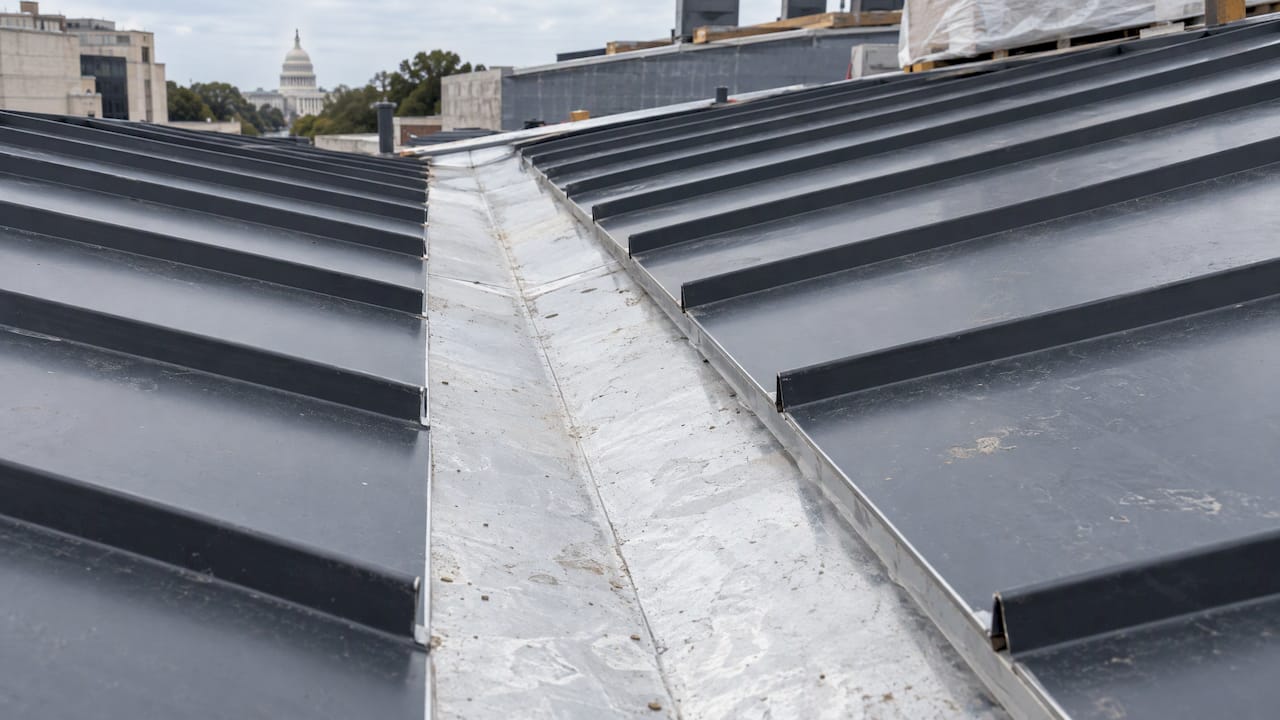
Valleys on a standing seam roof. Panels run to the valley and are cut back to leave a channel, so the valley is open by design. The valley metal, its fasteners and the underlayment beneath it do the work that the shingle-valley specs above describe. The same logic applies: the water channel stays clear, fasteners stay out of the water path, and the membrane sits under everything.
Metal over existing shingles. A reroof with metal over shingles puts you above an existing valley, open or closed. Whatever is down there, the new valley needs its own detailing. Read Metal Over Shingles Code: What Contractors Must Check before you commit, and confirm slope and underlayment requirements against the IBC checks for low-slope metal.
Tie-ins and penetrations. Valleys rarely stand alone. They meet sidewalls, chimneys and skylights, and those intersections are where rework comes from. We cover them in sidewall flashing, chimney flashing and skylight flashing.
Ordering. A valley with the wrong panel length or missing trim stops a crew in the middle of a day. Cut-to-length panels and a trim package matched to the takeoff keep valley work moving, which is the reason contractors order them together.
Check before you order
Before you commit to a valley type and buy material, run through this list:
- The shingle manufacturer’s valley bulletin for the product going on the roof (woven is off the table for laminated GAF shingles, for example).
- Valley slope: 4:12 or less points to open.
- Valley metal width, gauge and material (aluminum, galvanized steel, copper), and whether the maker wants a center rib.
- Underlayment width and type, and the fastener hold-back from the center line.
- Local code amendments and permit triggers.
- Total valley length, so metal runs stay within 10 feet and splices land where you want them.
A repair is the expensive way to find a mistake. The Roofing Brief, citing HomeGuide’s roof leak repair guide, puts valley leak repairs at $300 to $1,500 for materials and labor. A takeoff that catches the problem before the roof is built costs far less.
Metal panels, trim and flashing from one supplier
Mid-Atlantic Metal Panels supplies roofing contractors, builders and general contractors in Virginia, Maryland, Washington DC, Pennsylvania and West Virginia. We make 1-inch mechanical lock and 1.5-inch snap lock standing seam panels in 24-gauge and 26-gauge Englert steel, cut to length and delivered to the job site. Our metal roof trim and flashing packages are coordinated with the panel order, and cut-and-drop delivery puts custom-length panels on site, which helps reduce waste.
For projects where access or length is a problem, on-site roll forming is available. Our contractor supply page explains how to start an order with takeoff support.
Perspective
Valleys are where a roof’s reputation gets made. A crew can run flawless panels across two big planes and still get the call-back from the one spot where both planes dump their water.
Our view is simple: treat the valley as its own assembly. Decide the underlayment, the valley metal and the fastening pattern first, then size the panels and trim around them. When the trim package is built from the same takeoff as the panels, the valley, the sidewall and the ridge are cut to work together instead of being improvised on the roof.
That is why we put so much into custom-length panels and coordinated trim and flashing packages. Fewer field cuts and fewer surprises mean the crew spends the day installing, not solving. For contractors working under schedule pressure, we think that is the difference between a clean close-out and a punch list.
Matt Catino
FAQ
Is an open valley better than a closed valley?
For laminated architectural shingles and valleys at 4:12 or less, the NRCA recommends open valleys. IKO rates open metal valleys best for performance. Closed-cut valleys cost less and install faster, and they are acceptable where the shingle manufacturer permits them.
What is the minimum width for open valley metal?
The NRCA specifies 24 inches wide, with a center-line rib at least 1 inch high. Owens Corning requires at least 26-gauge metal at least 24 inches wide. IKO calls for at least 28-gauge. Build to the bulletin of the shingle on the roof.
What underlayment goes under valley metal?
Use a self-adhering membrane or polymer-modified bitumen sheet at least 36 inches wide, centered in the valley. Owens Corning’s bulletin specifies ASTM D1970 material with 6-inch end laps. Install it before the metal and keep fasteners at least 8 inches from the center line, per the NRCA.
Can you use a woven valley with architectural shingles?
Not with GAF’s laminated shingles. Its bulletin R-136 says they tend to crack and break when woven, and requires open or closed-cut valleys instead. Other makers have their own rules, so check the one for your product.
Sources
- NRCA, In the Valley guidelines
- Owens Corning roofing glossary
- Owens Corning open valley technical bulletin
- GAF valley flashing options bulletin R-136
- GAF Pro Field Guide for steep-slope roofs
- GAF, what is a roof valley
- ARMA laminated shingle valley application
- IKO leading edge plus application instructions
- IKO open valley vs closed valley comparison
- Professional Roofing, Essentials by Joan P. Crowe
- City of St. Peters re-roofing requirements
- Sheeley Roofing, open vs closed valley
- The Roofing Brief, valley flashing details
- Open vs closed valley performance over time