Reduce Roofing Waste: 8 Homeowner Steps, Custom Panels for Contractors

Learn how homeowners and contractors can reduce roofing waste with accurate takeoffs, jobsite sorting, recycling plans, and custom length metal panels.
The single most effective way to reduce roofing waste is to plan before the first shingle comes off: an accurate takeoff and the right waste factor prevent over-ordering, while on-site sorting and pre-booked recyclers catch what’s left. Contractors add another layer by ordering custom-length panels or using cut-and-drop delivery, which cuts scrap before it’s ever created.
TL;DR:
- Set a diversion target of at least 50%, check local rules for higher requirements and penalties up to $1,000 per day, and retain weight tickets.
- Keep roofing materials in separate streams: clean shingles can enter hot mix asphalt recycling, intact metal can be salvaged, and suspected asbestos requires licensed abatement.
- PVC membrane recycling usually pencils out only on larger roofs; consolidate loads across projects, since small jobs may not meet recycler volume or truckload economics.
- For metal roofs, custom length panels, matched trim packages, and on site roll forming can reduce field cuts and scrap before installation.
Table of Contents
- Quick checklist: 8 immediate steps to cut roofing waste on a job
- How to build a short construction and waste management plan for a reroof
- Material-specific handling: best reuse, recycling, and disposal routes
- On-site sorting, staging, and logistics that minimize contamination
- Reuse, salvage, and donation: routes for still-useful materials
- How to find recycling, shingle drop-off, and C&D processors
- Costs, savings, and incentives: what to expect when you reduce roofing waste
- Contractor-focused tactics: cut-and-drop and custom-length panels to reduce waste
- Author perspective: realistic trade-offs when prioritizing waste reduction
- How Mid-Atlantic Metal Panels can help reduce jobsite waste
- FAQ
- Sources
- Authoritative resources and directories
Quick checklist: 8 immediate steps to cut roofing waste on a job
Most waste on a reroof traces back to decisions made before anyone climbs a ladder. Working through these steps in order keeps material costs down and diversion rates up.
- Perform an accurate takeoff and choose a waste factor based on roof complexity, not a flat guess.
- Schedule deliveries to arrive close to installation so materials aren’t sitting exposed to weather.
- Order custom-length panels or use a cut-and-drop service when the roof design allows it.
- Set up separate, labeled bins for each material stream before tear-off starts.
- Pull intact pieces for salvage or donation before demolition begins.
- Call recyclers ahead of time to confirm what they accept and schedule pickup.
- Walk the crew through separation rules and contamination risks in a five-minute briefing.
- Keep weight tickets and receipts on hand for diversion reporting.
Pro Tip: Lock in your recycler and hauler before tear-off day, not after the dumpster is full.
How to build a short construction and waste management plan for a reroof
A construction and waste management plan (CWMP) doesn’t need to be complicated for a reroof, but it does need a few fixed elements to be useful on a jobsite or for a permit file.
- Material streams you expect to generate (shingles, metal, wood, membrane, insulation).
- A diversion target, with 50% as a common baseline before higher local requirements apply.
- Handling procedures for each stream, including who sorts and where it’s staged.
- Confirmed hauling partners or recyclers for each material type.
- A reporting method, typically weight tickets or receipts kept in a project file.
According to Professional Roofing, contractors should track waste by weight or volume and aim for at least 50% diversion from landfills, since some jurisdictions enforce higher targets and penalize noncompliance, including fines up to $1,000 per day in at least one county program. Rating systems like LEED and the IgCC are pushing this from a suggestion toward a documented requirement, so keeping receipts from the start saves a scramble later.
Material-specific handling: best reuse, recycling, and disposal routes
Each roofing material has its own best path off the jobsite, and mixing them together usually ruins the chance to recycle any of them.
| Material | Best route | Key prep note |
|---|---|---|
| Asphalt shingles | Recycling into hot-mix asphalt | Keep free of nails, wood, and wrapping |
| Metal panels and flashing | Salvage if intact, scrap recycling if not | Intact panels retain the most value |
| PVC/TPO membranes | Membrane recycling where volume allows | Roll cleanly, avoid contamination |
| Wood sheathing and trim | Salvage or clean wood recycling | Treated wood needs separate disposal |
| Insulation and gypsum | Separate stream, landfill if unrecyclable | Keep out of other recyclable bins |
The EPA identifies asphalt shingle recycling into hot-mix asphalt as a major diversion route, noting that roughly 10 million tons of post-consumer tear-off shingles are generated annually in the US, with most still landfilled. A few handling notes matter beyond the table:
- Asbestos or suspected hazardous materials should be identified and referred to licensed abatement professionals, never sorted by a general crew.
- PVC membrane recycling works best with larger, mechanically attached roofs since volume drives the economics, according to a NIST roof recycling review.
On-site sorting, staging, and logistics that minimize contamination
Where you put the bins matters almost as much as what goes in them. A tear-off crew moving fast will dump into whatever container is closest, so placement has to make the right choice the easy one.
- Position bins near the drop zone so crews don’t carry debris across the site to sort it.
- Size and label bins by material density: shingles need a heavier-duty container than trim scrap.
- Use controlled tear-off techniques, pulling shingles in sections rather than ripping broad areas, to keep rubble from mixing.
- Watch the weather and time tear-off for dry windows so materials aren’t soaked and ruined for recycling.
- Give the crew a short checklist at the start of each shift rather than relying on memory from the last job.
Pro Tip: A five-minute toolbox talk on sorting rules at the start of tear-off prevents most contamination problems before they start.
Reuse, salvage, and donation: routes for still-useful materials
Not everything coming off a roof is waste. Intact metal panels, vents, clean dimensional lumber, and specialty flashings often have resale or reuse value if they’re pulled before demolition gets rough.
- Identify salvageable items before tear-off, not after they’ve been thrown in a pile.
- Clean, label, and photograph items you plan to list or donate.
- Check local building-material reuse centers and reclaimers, which often take flashing, trim, and sound lumber.
- Consider partial deconstruction over fast demo when a roof has several salvageable components, since it raises reuse value even though it takes longer.
How to find recycling, shingle drop-off, and C&D processors
Finding the right processor is mostly a matter of knowing where to look and asking the right questions before you haul anything.
- Check Shinglerecycling and the Construction & Demolition Recycling Association for shingle and C&D processors near the job.
- Ask any recycler what they accept, how much contamination they’ll tolerate, what prep they require, and what fees apply.
- Confirm weight ticket procedures up front since these documents back up your diversion reporting.
- For PVC or membrane material, consolidate loads across multiple projects to reach the volume recyclers need to make it worthwhile.
Coordinating this kind of logistics works better when it’s discussed before the job starts. A preconstruction meeting agenda that includes waste handling alongside scheduling and scope can prevent the rework and confusion that generate extra waste later.
Costs, savings, and incentives: what to expect when you reduce roofing waste
Reducing waste usually saves money, but not always in the place you’d expect. Landfill tipping fees avoided through recycling are one savings source, while tighter takeoffs that cut over-ordering save on material costs directly.
- Avoided tipping fees show up most clearly on larger tear-offs with a dedicated shingle recycler nearby.
- Accurate takeoffs reduce the material waste factor baked into most estimates, lowering purchase costs.
- Recycling becomes less practical on very small jobs where hauling a half-load doesn’t reach truckload economics.
- Some local diversion programs offer reduced permit fees or credits for documented recycling, worth checking before the job starts.
One figure worth knowing: roofing material made up about 17.47% of construction and demolition debris in a 2015 national breakdown, a share large enough that even modest diversion gains on roofing alone move the needle on a project’s overall waste numbers.
Contractor-focused tactics: cut-and-drop and custom-length panels to reduce waste
For metal roofing specifically, the waste conversation often starts at the supplier, not the jobsite. Ordering custom-length panels instead of standard stock means fewer field cuts and less drop scrap left on the ground at the end of the day. On-site roll forming extends that further on complex or oversized roofs where trucking long panels isn’t practical, and matched trim packages cut down on mis-cuts that would otherwise need rework.
- Request custom-length panels and cut-and-drop delivery sized to your actual roof plan.
- Ask about on-site roll forming for roofs where standard panel lengths won’t work.
- Use a standing seam waste-factor takeoff rather than a generic percentage to size your order.
- Confirm trim and flashing packages are matched to the panel run before ordering, following guidance on standing seam panel layout.
Author perspective: realistic trade-offs when prioritizing waste reduction
Higher diversion rates rarely come free. Sorting takes crew time, and salvage work slows demo day, so budgets and schedules need to account for that honestly rather than pretending waste reduction is a zero-cost add-on. The projects that handle this best get the property owner’s buy-in early, before tear-off, because that’s when decisions about salvage, donation, and recycling actually have room to happen. Framed as a value conversation rather than an extra line item, waste reduction usually pays for itself in avoided disposal fees and the occasional resale check.
— Matt Catino
How Mid-Atlantic Metal Panels can help reduce jobsite waste
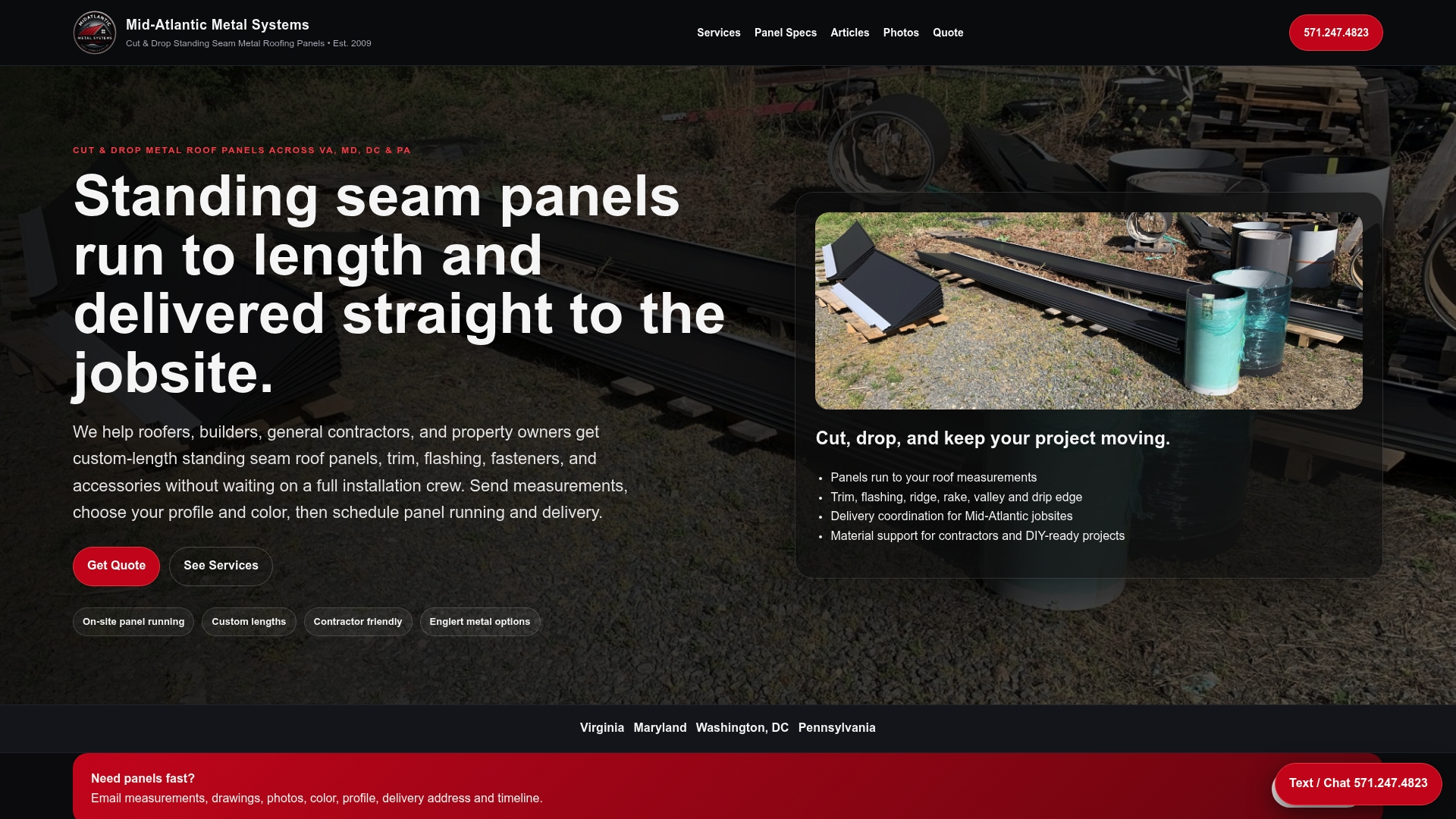
We supply custom-length standing seam panels, cut-and-drop delivery, on-site roll forming, and coordinated trim packages designed to reduce scrap waste. Contractors typically benefit from fewer field cuts, fewer return trips for mismatched trim, and faster installation because the panels arrive ready for the roof they’re measured for.
- Order panels cut to your exact roof dimensions instead of trimming standard lengths on site.
- Get trim and flashing packages matched to your panel run before delivery.
- Request on-site roll forming for roofs where long panel runs don’t fit standard trucking.
If you’re planning a standing seam reroof and want to cut waste before it happens, check our standing seam metal roofing options or request a quote on your next project.
FAQ
Can you throw away roofing shingles?
Yes, shingles can go to a landfill, but most jurisdictions encourage or require diversion through shingle recycling programs instead. The EPA notes that roughly 9 million tons of shingle waste are landfilled annually in the US, even though recycling into hot-mix asphalt is a well-established alternative.
What are the 7 ways to reduce waste?
There’s no single official list, but common practices include accurate takeoffs, source reduction through right-sized ordering, on-site sorting, salvage and reuse, recycling by material type, scheduling to avoid weather damage, and tracking diversion with weight tickets. These align with the construction waste management plan elements outlined by Professional Roofing.
What is the 25% rule in roofing?
This isn’t a standardized industry or code term with one universal definition, so it’s best to confirm what a specific local code or roofing manufacturer means by it before relying on it. If you’ve heard it referenced for your jurisdiction, check with your local building department for the exact rule.
How do you demo a roof with less waste?
Tear off in controlled sections rather than ripping broad areas, since this keeps rubble streams separated and easier to sort. Pull salvageable items like vents, flashing, and intact panels before the bulk demolition starts, and sort materials into labeled bins as they come off rather than mixing everything into one dumpster.
Sources
- Taking out the trash — Professional Roofing
- Sustainable Management of Construction and Demolition Materials — US EPA
- Asphalt shingles — EPA WARM (archived)
- Shinglerecycling
Authoritative resources and directories
- Sustainable Management of Construction and Demolition Materials — US EPA
- Asphalt shingles — EPA WARM (archived)
- Shinglerecycling
- Taking out the trash — Professional Roofing
- Construction and Demolition Debris Management in the United States, 2015 — EPA
- Roof recycling process and market considerations (NIST/industry review)