24 Gauge vs 26 Gauge Metal Roofing: Which Is Right for Your Project?
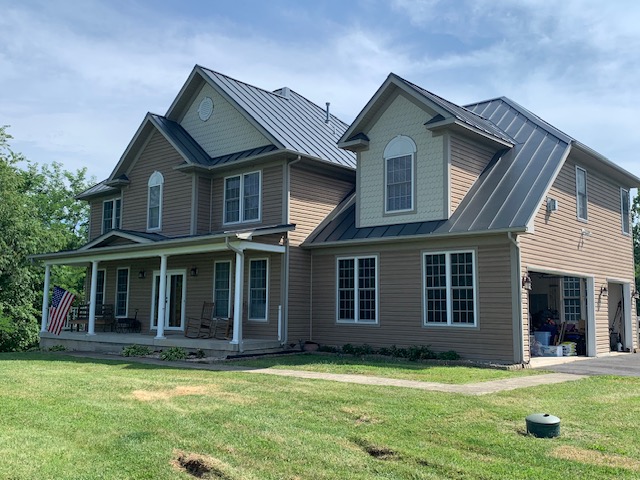
One of the most common questions contractors, builders, architects, and property owners ask is whether to choose 24 gauge or 26 gauge metal roofing panels. While both are widely used throughout the Mid-Atlantic region, they serve different purposes and offer distinct advantages. This guide explains the differences between the two gauges, including durability, appearance, cost, wind resistance, installation considerations, and long-term value.
Selecting the proper gauge thickness is one of the most important decisions made during the design and planning phase of a standing seam metal roofing project.
Contractors frequently encounter homeowners who ask: “Should I upgrade to 24 gauge?”
Builders often ask: “Is 26 gauge sufficient for this project?”
Architects may specify one gauge while owners question the additional investment.
The answer depends on several factors, including:
- Project type
- Roof design
- Budget
- Wind exposure
- Panel length
- Architectural expectations
- Long-term ownership goals
Understanding the differences between 24 gauge and 26 gauge metal roofing allows contractors and property owners to make informed decisions.
Understanding Metal Roofing Gauge
Gauge refers to the thickness of the steel used to manufacture roofing panels.
A common misconception is that a higher gauge number means thicker steel. The opposite is true.
Gauge Comparison
24 Gauge Steel:
- Thicker
- Heavier
- Stronger
- More rigid
26 Gauge Steel:
- Slightly thinner
- Lighter
- More economical
- Commonly used in residential applications
Although the thickness difference appears small, it can affect performance, appearance, and project costs.
Why Gauge Matters
The thickness of the steel influences several important performance characteristics.
Structural Strength
Thicker steel generally provides:
- Increased rigidity
- Greater dent resistance
- Reduced panel movement
Wind Resistance
Gauge can influence wind performance, particularly when combined with:
- Panel profile
- Clip systems
- Fastener spacing
Oil Canning Visibility
Oil canning refers to visible waviness that sometimes appears in flat metal panels.
Although oil canning is largely aesthetic, thicker material often reduces its visibility.
Long-Term Durability
Thicker steel may provide additional durability under demanding environmental conditions.
24 Gauge Metal Roofing Advantages
Many premium standing seam roofing systems utilize 24 gauge steel.
Increased Rigidity
One of the most noticeable advantages is stiffness.
Benefits include:
- Better appearance
- Reduced panel movement
- Improved performance on long panel runs
This is particularly valuable on high-end architectural projects.
Improved Oil Canning Resistance
No metal roof is completely immune to oil canning. However, thicker steel typically performs better.
Architects often specify 24 gauge when aesthetics are critical.
Superior Dent Resistance
Areas prone to the following may benefit from thicker material:
- Falling branches
- Hail
- Severe weather
Although no roof is completely dent-proof, 24 gauge generally provides improved resistance.
Longer Panel Runs
Long panel applications frequently benefit from increased rigidity.
Examples include:
- Churches
- Agricultural buildings
- Commercial facilities
- Luxury residences
Premium Architectural Appearance
Many architects prefer 24 gauge because of:
- Straighter panel lines
- Reduced waviness
- Enhanced visual performance
Typical Applications for 24 Gauge
24 gauge is commonly used on:
- Luxury homes
- Estate properties
- Churches
- Schools
- Government buildings
- Commercial facilities
- Architectural projects
Many premium roofing specifications require 24 gauge steel.
26 Gauge Metal Roofing Advantages
26 gauge remains one of the most widely used roofing materials in North America.
Lower Material Cost
The primary advantage is affordability.
Benefits include:
- Lower project costs
- Greater budget flexibility
- Competitive pricing
Excellent Residential Performance
Many residential roofs perform exceptionally well with 26 gauge material.
When installed properly, 26 gauge standing seam systems can provide decades of reliable service.
Lighter Weight
Reduced weight may simplify:
- Handling
- Transportation
- Installation
Broad Availability
26 gauge products are commonly stocked by many manufacturers.
This often results in:
- Faster lead times
- Greater color availability
Typical Applications for 26 Gauge
26 gauge is commonly used on:
- Residential homes
- Garages
- Barns
- Workshops
- Small commercial buildings
It remains one of the most popular choices throughout Virginia, Maryland, Pennsylvania, and West Virginia.
Wind Resistance Comparison
Many contractors ask whether 24 gauge performs significantly better in high winds.
The answer depends on the complete roofing system.
Wind performance involves:
- Panel profile
- Clip design
- Attachment methods
- Engineering requirements
A properly engineered 26 gauge system may outperform a poorly installed 24 gauge system. However, thicker steel generally contributes to overall system strength.
Snow Load Performance
The Mid-Atlantic region frequently experiences:
- Heavy snow
- Ice accumulation
- Freeze-thaw cycles
Both gauges can perform well under snow loads when properly designed.
Project engineering remains more important than gauge alone.
Hail Resistance
Homeowners frequently associate thicker steel with improved hail resistance.
While hail performance depends on many variables, thicker material generally provides:
- Greater dent resistance
- Improved impact performance
This can be attractive for long-term property owners.
Cost Comparison
Cost differences vary based on:
- Manufacturer
- Market conditions
- Material pricing
- Project size
Typical differences may range from 10% to 25% higher material costs for 24 gauge compared to 26 gauge.
Contractors should evaluate lifecycle value rather than initial cost alone.
Residential Project Recommendations
For many residential projects, 26 gauge provides excellent value.
Ideal situations include:
- Standard homes
- Budget-conscious projects
- Moderate panel lengths
Commercial Project Recommendations
Many commercial projects benefit from 24 gauge material because of:
- Longer panel lengths
- Greater durability requirements
- Architectural specifications
Architectural Project Recommendations
High-end architectural projects frequently specify 24 gauge because appearance often becomes the primary objective.
Benefits include:
- Reduced visual distortion
- Improved rigidity
- Premium appearance
Which Gauge Does Mid Atlantic Metal Panels Recommend?
The answer depends on the project.
Consider 24 Gauge When
- Appearance is critical
- Panel lengths are long
- Budget allows for premium materials
- The project is architectural in nature
Consider 26 Gauge When
- Budget is a priority
- The project is a residential application
- Panel lengths are standard
- Cost efficiency is important
Both gauges can provide outstanding long-term performance.
Common Misconceptions
Myth: 26 Gauge Is Weak
False. Properly installed 26 gauge standing seam systems routinely provide decades of performance.
Myth: 24 Gauge Eliminates Oil Canning
False. Although it often reduces visibility, oil canning can still occur.
Myth: Gauge Is the Only Performance Factor
False. Installation quality remains one of the most important factors affecting performance.
Frequently Asked Questions
Is 24 gauge metal roofing worth the extra cost?
For many architectural and commercial projects, yes. The added rigidity and appearance benefits often justify the investment.
How much thicker is 24 gauge compared to 26 gauge?
24 gauge steel is measurably thicker and heavier, resulting in increased rigidity.
Does 24 gauge reduce oil canning?
Often yes, but it does not completely eliminate the possibility.
What gauge is most common for residential roofing?
26 gauge remains extremely popular for residential applications.
What gauge do architects prefer?
Many architects prefer 24 gauge for premium projects where aesthetics matter.
Conclusion
The choice between 24 gauge and 26 gauge metal roofing ultimately depends on project goals.
Both materials have proven themselves capable of delivering decades of reliable performance.
Contractors, architects, builders, and property owners should evaluate:
- Budget
- Appearance requirements
- Panel lengths
- Environmental conditions
- Long-term ownership plans
By understanding the strengths of each option, roofing professionals can recommend solutions that maximize value and long-term satisfaction.