Benefits of On-Site Roll Forming for Standing Seam Metal Roofing Projects
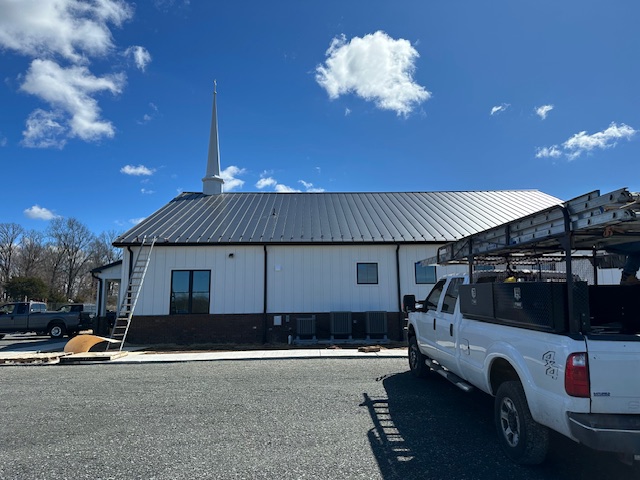
On-site roll forming has transformed the standing seam metal roofing industry by allowing contractors to manufacture panels directly at the jobsite. This approach eliminates many transportation limitations, allows extremely long panel lengths, reduces seams, minimizes handling damage, and improves installation efficiency. This guide explains how on-site roll forming works, when it should be used, and why it provides significant advantages for contractors, architects, and building owners.
Standing seam roofing systems have become one of the most desirable roofing solutions available for residential, commercial, institutional, and architectural construction.
As roofing projects have become larger and more complex, contractors have increasingly sought ways to improve efficiency, reduce waste, and eliminate transportation challenges. One of the most effective solutions is on-site roll forming.
Rather than manufacturing panels at a distant facility and transporting them to the jobsite, on-site roll forming produces roofing panels directly where they will be installed.
This process provides substantial advantages that many contractors, architects, builders, and property owners may not fully understand.
What Is On-Site Roll Forming?
On-site roll forming involves transporting a portable standing seam panel machine directly to a project location. Metal coils are loaded into the machine, which then continuously forms roofing panels on demand.
Panels are produced:
- At the jobsite
- To exact lengths
- As installation progresses
This eliminates many of the limitations associated with factory-produced panel delivery.
How Roll Forming Works
The process begins with a metal coil. The coil passes through a series of precision rollers that gradually shape the metal into the desired profile.
Examples include:
- 1-inch mechanical lock panels
- 1.5-inch snap lock panels
The finished panel exits the machine fully formed and ready for installation. Because the machine can produce panels continuously, virtually any panel length can be manufactured.
Why Transportation Limits Matter
One of the biggest challenges facing metal roofing contractors involves panel transportation. Most roads impose practical limitations on:
- Trailer lengths
- Transport dimensions
- Turning radius
- Delivery logistics
Long roofing panels become increasingly difficult to transport safely. For many projects, transportation, not manufacturing, is the limiting factor.
The Problem With Extremely Long Panels
Large roofs often require panel lengths exceeding:
- 30 feet
- 40 feet
- 50 feet
- 60 feet
Transporting these panels can create challenges, including:
- Road restrictions
- Delivery delays
- Special permitting
- Increased freight costs
- Handling difficulties
On-site roll forming eliminates these concerns.
Unlimited Panel Length Potential
One of the greatest benefits of on-site roll forming is the ability to manufacture exceptionally long panels. Rather than being limited by transportation constraints, panel length becomes limited primarily by roof design.
This is especially valuable for:
- Churches
- Commercial facilities
- Schools
- Agricultural buildings
- Warehouses
- Government projects
Reduced Panel Seams
Every seam represents a potential weakness. Longer continuous panels reduce:
- End laps
- Horizontal seams
- Water entry points
Benefits include:
- Improved weather resistance
- Better appearance
- Enhanced durability
Many architects prefer continuous panel designs whenever possible.
Improved Appearance
Long, uninterrupted panel runs create a cleaner architectural appearance. Advantages include:
- Consistent panel lines
- Fewer visual interruptions
- Enhanced curb appeal
This is particularly important on:
- Luxury homes
- Churches
- Institutional buildings
- High-end commercial projects
Reduced Freight Costs
Transporting long roofing panels can be expensive. Specialized trailers often require:
- Additional planning
- Longer lead times
- Increased freight charges
On-site roll forming reduces many of these transportation expenses.
Reduced Handling Damage
Every time a roofing panel is moved, the risk of damage increases. Potential issues include:
- Scratches
- Dents
- Bent edges
- Coating damage
Manufacturing panels on-site reduces handling requirements significantly. Fewer handling events often result in:
- Better product quality
- Cleaner installations
- Reduced waste
Improved Installation Efficiency
Many contractors find that on-site roll forming streamlines installation. Panels can be produced:
- When needed
- In sequence
- To exact dimensions
This helps reduce:
- Material staging requirements
- Panel sorting
- Jobsite clutter
Crews often work more efficiently because panels are available exactly when required.
Reduced Material Waste
Traditional manufacturing sometimes requires ordering extra panel lengths to accommodate transportation or fabrication limitations. On-site roll forming allows precise production.
Benefits include:
- Better material utilization
- Lower waste percentages
- Improved profitability
Waste reduction becomes particularly important on large projects.
Better Scheduling Flexibility
Construction schedules change frequently because of weather delays, material shortages, crew availability, and project sequencing. On-site production allows contractors to adapt more easily than relying solely on pre-manufactured shipments.
Benefits for Commercial Projects
Commercial projects often benefit the most. Examples include:
- Office buildings
- Retail centers
- Warehouses
- Schools
- Municipal facilities
These projects frequently contain long panel runs where transportation becomes a challenge.
Benefits for Churches
Churches often feature:
- Tall roof sections
- Long panel lengths
- Architectural requirements
On-site roll forming allows panels to be manufactured to exact dimensions while preserving appearance.
Benefits for Agricultural Buildings
Agricultural facilities commonly require:
- Large roof areas
- Long panels
- Cost efficiency
On-site production can improve project efficiency substantially.
Benefits for Custom Homes
Luxury residential projects increasingly utilize standing seam roofing. Homeowners often prioritize:
- Appearance
- Longevity
- Architectural detail
Continuous panel production contributes to a premium finished product.
Architectural Advantages
Architects frequently specify standing seam systems because of their clean appearance. On-site roll forming enhances this by:
- Minimizing seams
- Improving panel consistency
- Supporting custom design requirements
Many architectural projects specifically benefit from long-panel capabilities.
Quality Control Advantages
Producing panels on-site allows contractors to monitor:
- Panel quality
- Dimensions
- Production consistency
Problems can often be identified immediately. This helps reduce costly surprises during installation.
Weather Considerations
Contractors frequently ask whether weather affects roll forming. Proper planning remains important. However, on-site production often allows contractors to respond more quickly to changing conditions than traditional delivery schedules.
Common Misconceptions
Myth: On-site roll forming is only for large projects
False. Many residential and commercial projects benefit from on-site production.
Myth: Transportation is not a major issue
False. Transportation often becomes one of the largest logistical challenges on long-panel projects.
Myth: Factory production is always better
False. Both approaches have advantages. The best solution depends on project requirements.
When On-Site Roll Forming Makes Sense
Projects often benefit when:
- Panel lengths exceed transportation limits
- Appearance is critical
- Seam reduction is desired
- Freight costs are high
- Handling damage is a concern
Many large standing seam projects meet these criteria.
Frequently Asked Questions
What is on-site roll forming?
On-site roll forming produces standing seam roofing panels directly at the jobsite using a portable roll forming machine.
How long can on-site formed panels be?
Panel length is often limited primarily by roof design rather than transportation constraints.
Does on-site roll forming reduce seams?
Yes. Longer panels often eliminate many horizontal seams.
Is on-site roll forming more expensive?
Not necessarily. Freight savings and efficiency improvements often offset production costs.
What projects benefit most?
Commercial buildings, churches, schools, warehouses, agricultural structures, and luxury homes frequently benefit.
Does on-site production improve quality?
It often reduces handling damage and improves installation efficiency.
Conclusion
On-site roll forming represents one of the most significant advancements in modern standing seam roofing.
By producing panels directly at the project location, contractors gain:
- Greater flexibility
- Longer panel capabilities
- Reduced transportation challenges
- Improved appearance
- Reduced waste
- Enhanced installation efficiency
For many commercial, institutional, agricultural, and architectural projects, on-site roll forming provides advantages that traditional manufacturing methods cannot match.
Need long-length standing seam panels for your next project? Mid Atlantic Metal Panels offers:
- On-site roll forming services
- 1-inch mechanical lock panels
- 1.5-inch snap lock panels
- Custom flashing and trim
- Contractor material takeoffs
- Cut-and-drop delivery
- Commercial project support
Contact Mid Atlantic Metal Panels today to discuss your project and determine whether on-site roll forming is the right solution.