4 Metal Roof Warranties Explained Every Homeowner Must Check
Homeowner primer on the four metal roof warranties, what voids coverage, how claims work, and a preinstall checklist to protect warranty.
Metal roof warranties are not one document. They are four separate contracts, material, finish, workmanship, and weathertightness, each backed by a different party with different rules. A “50-year” headline usually describes just one of them, often with proration built in. Before any panel goes on your roof, get the actual warranty text and the installer’s certification in writing.
TL;DR:
- Metal roof warranties are four separate contracts covering material, finish, workmanship, and weathertightness, each backed by different providers.
- Warranties vary in length, with substrate warranties typically lasting 20 to 40 years, and finish warranties generally between 20 to 40 years depending on coating type.
- Most warranty denials relate to improper or unapproved penetrations, dissimilar metals, physical damage caused by neglect, or administrative errors in registration.
- Remedies are usually limited to repair or replacement of the material with caps on liability, and proration often reduces compensation over time.
- Confirm your installer is certified, get detailed warranty documents, and perform routine inspections to maintain warranty validity over the roof’s lifespan.
Table of Contents
- Metal Roof Warranties Explained: The Four Categories You’ll Encounter
- How Long Do Metal Roof Warranties Last, and What Do They Actually Cover?
- What Voids a Metal Roof Warranty?
- How Do Metal Roof Warranty Claims and Remedies Actually Work?
- What Should You Confirm Before Signing a Metal Roofing Contract?
- How Do You Keep a Metal Roof Warranty Valid Over Time?
- Why Supplier Practices Affect Your Metal Roof Warranty
- Where to Verify Warranty Language Yourself
- Why Homeowners Keep Getting Burned by Warranty Language
- Sources
Metal Roof Warranties Explained: The Four Categories You’ll Encounter
Every metal roof carries up to four distinct warranties, and they rarely come from the same company. The Metal Construction Association’s warranty guidance breaks them into material, finish/coating, workmanship, and weathertightness coverage, and knowing which one applies to a given problem saves you weeks of phone calls.
- Material/substrate warranty: Issued by the steel mill or panel manufacturer, covering manufacturing defects like premature rust-through or perforation.
- Finish/coating warranty: Issued by the paint supplier or panel manufacturer, covering fading, chalking, and coating failure, not the metal itself.
- Workmanship/installer warranty: Issued by your contractor, covering installation mistakes: bad seams, missed fasteners, poor flashing work.
- Weathertightness/system warranty: Issued by the manufacturer or a certified installer program, covering leaks across the entire assembled roof system.
If your panel corrodes, you call the mill. If your roof leaks around a chimney flashing two years in, that’s a workmanship or system claim, not a material one. Mixing these up is the single most common reason homeowners feel stonewalled during a claim.
How Long Do Metal Roof Warranties Last, and What Do They Actually Cover?
Duration varies wildly by category, and the fine print on measurement standards matters more than the number on the brochure.
Substrate warranties typically define failure as corrosion or perforation through the metal, and terms commonly run from 20 to 40 years depending on gauge and coating system.
Finish warranties split sharply by coating type. PVDF systems (branded as Kynar 500 or Hylar 5000) commonly carry 30 to 40 year fade and chalk warranties, while SMP coatings usually top out around 20 to 25 years. Fade limits are measured in Hunter ΔE units, a color-difference scale from ASTM testing, not a subjective “looks faded” judgment call.
Statistic Callout: A typical finish warranty might cap color shift at 5 ΔE units over 20 years. Ask your contractor for the exact ΔE threshold in your paperwork, not just a “no significant fade” promise.
Workmanship warranties from contractors usually run 5 to 10 years, though some installers offer lifetime terms as a competitive differentiator.
Weathertightness warranties, especially No-Dollar-Limit (NDL) programs, can extend to 20 years non-prorated, but only when the installer meets strict certification and inspection requirements.
What Voids a Metal Roof Warranty?
Warranty denials rarely come from bad luck. They come from specific, avoidable actions, and the Metal Construction Association’s maintenance guidance flags most of them as preventable.
- Unapproved penetrations. Drilling for a satellite dish or vent without an approved flashing detail voids coverage around that point.
- Improper repairs. Patching a leak with roofing tar or an uncertified crew often nullifies the surrounding warranty section.
- Dissimilar metals. Letting aluminum flashing touch steel panels (or vice versa) triggers galvanic corrosion, which most material warranties exclude outright.
- Debris and standing water. Leaves and pooled water accelerate coating breakdown and are usually classified as a maintenance failure, not a product defect.
- Pressure washing. High-pressure cleaning can strip coatings and is explicitly barred in most finish warranties.
- Untreated field cuts. Panel edges cut on-site need touch-up paint or sealant; bare edges left exposed are a common denial trigger.
Coastal properties face an added layer of restriction. Many manufacturers exclude or shorten coverage within a mile or two of saltwater due to accelerated corrosion, a detail worth reviewing before you commit to a coastal metal roofing specification.
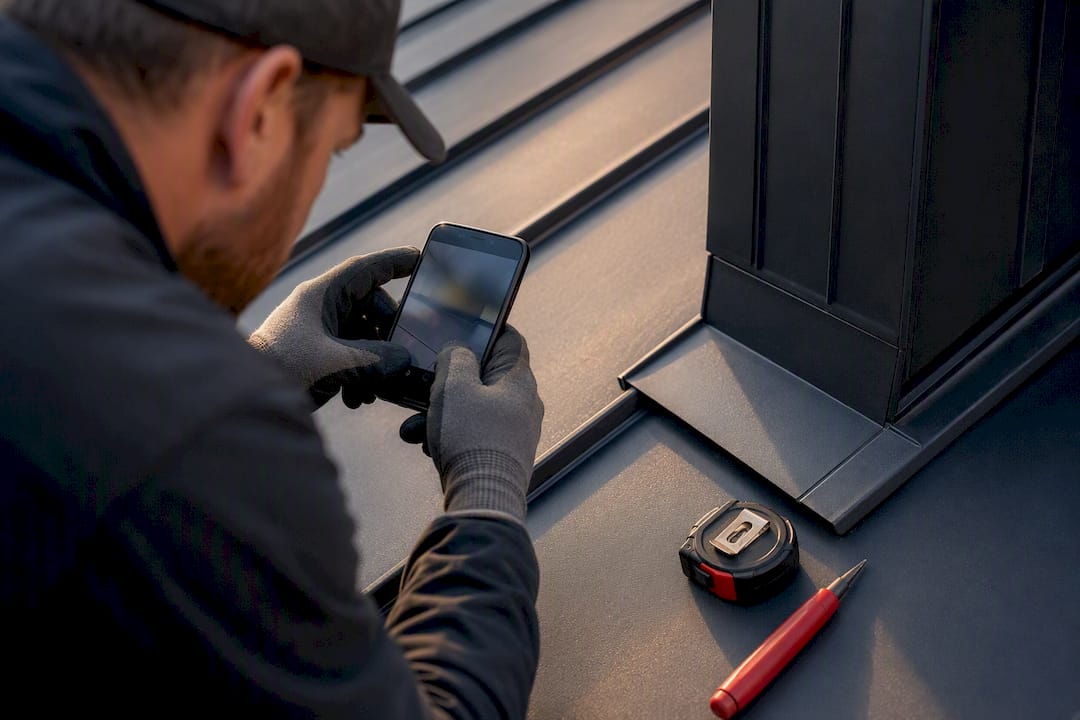
Pro Tip: Photograph every field cut and flashing detail before the crew leaves the job site. If a claim ever gets disputed, dated photos are worth more than memory.
Administrative failures deny just as many claims as physical damage. Missing the registration deadline, skipping notice-of-defect timelines, or using an uncertified installer can void coverage even when the roof itself is flawless.
How Do Metal Roof Warranty Claims and Remedies Actually Work?
The remedy language buried in your warranty matters more than the number of years printed on the cover. A sample manufacturer warranty from ProVia shows the pattern common across the industry: remedies limited to repair or replacement of the product itself, with total liability capped at the price you paid for the material, not labor or consequential damages.
- Repair vs. replace vs. refund: Most material warranties choose the remedy, not you, and usually pick the cheapest option for the manufacturer.
- Proration: A 40-year warranty prorated after year 10 might only cover 60% of material cost by year 25. Ask for the actual proration table, not a verbal assurance.
- Labor exclusions: A valid material claim can still leave you paying for the crane, the crew, and the disposal fees, since manufacturers frequently cover product only.
This is why a strong workmanship or NDL weathertightness warranty often protects you better than a longer, heavily prorated material warranty. Coating measurement details matter here too, since finish claims hinge on the exact fade thresholds written into the document.
What Should You Confirm Before Signing a Metal Roofing Contract?
Do this before a single panel is delivered:
- Request the exact sample warranty document for your specific product and color, not a generic brochure.
- Confirm the contractor is on the manufacturer’s certified installer list, since uncertified installation voids most NDL programs.
- Get pre-approved shop drawings and a written list of approved accessories and components.
- Ask who registers the warranty, and by what deadline, since installer requirements often decide eligibility before the first screw goes in.
Also nail down the financial specifics in writing:
- Who pays for labor, panel removal, and disposal if a claim is approved.
- Whether the remedy includes color-matched replacement panels or just “equivalent” stock.
- Whether the approved accessory and fastener list is documented, since off-list trim can void the system warranty.
How Do You Keep a Metal Roof Warranty Valid Over Time?
Coverage lapses more often from neglect than from defects. A simple annual routine keeps you protected.
- Inspect twice a year, spring and fall, checking fasteners, sealant, and debris buildup near valleys.
- Clean with low-pressure water and mild soap only. Skip the pressure washer entirely.
- Keep records: dated photos, contractor receipts, the certified installer’s signoff, and confirmation of warranty registration.
- Get written pre-approval before adding solar panels, HVAC curbs, or antennas, and use a crew certified for your specific panel system.
Pro Tip: Store your warranty documents, registration confirmation, and installer certification in one folder, digital and physical. When you sell the house, that folder is what makes the warranty transfer painless instead of a scramble.
Why Supplier Practices Affect Your Metal Roof Warranty
Warranty friction often traces back to the supply chain, not just the installer. Some suppliers work directly with roofing contractors across Virginia, Maryland, Washington DC, Pennsylvania, and West Virginia, supplying custom-length standing seam panels built on Englert systems in 24-gauge and 26-gauge steel, and that specificity matters for warranty compliance.
- Custom-length, cut-and-drop delivery reduces field cuts, which cuts down on the untreated-edge issue that voids finish warranties.
- On-site roll forming produces exact panel lengths on demand, minimizing seams and penetrations that create weathertightness risk.
- Detailed shop drawings and trim packages give contractors the documentation manufacturers expect for warranty registration.
- Contractor-supplied installation records, paired with supplier-verified materials, give homeowners a cleaner paper trail if a claim ever comes up.
Where to Verify Warranty Language Yourself
For a second opinion on any warranty you’re handed, the Metal Construction Association’s warranty guidance and the ACHR News breakdown of installation coverage both lay out remedy and proration language in plain terms. Compare those structures against your own contract before you sign.
Why Homeowners Keep Getting Burned by Warranty Language
The conventional advice tells homeowners to chase the longest warranty term available. That’s backwards. A 40-year prorated material warranty with a labor exclusion protects you far less than a 20-year non-prorated NDL system warranty that actually pays for repair without a sliding scale.
What gets overlooked most is that a roof is a system, not a single product. A flawless panel sitting under a failed flashing detail is still a leaking roof, and manufacturers know exactly where their liability ends. That’s why the workmanship and weathertightness warranties, the ones tied to your specific installer, deserve more scrutiny than the material warranty most homeowners fixate on.
Prioritize this: confirm your installer’s certification status before you compare warranty years at all. A certified installer unlocks NDL coverage that a “better” material warranty can’t replace. Everything else, the ΔE thresholds, the proration tables, the accessory lists, matters, but it only matters once you know the person on your roof qualifies for the coverage being promised.
— Matt Catino
Sources
- Metal Construction Association — Metal roof warranty guidance
- ProVia metal roofing standard limited warranty (sample language)
- ACHR News — What warranties for metal roof installation cover