Jobsite Delivery Receiving: A Ready-to-Copy Checklist

Copyable jobsite delivery receiving checklist. Includes a 30 second receiver routine, metal panel unloading tips, and field app templates contractors can use.
Confirm the delivery window, a named receiver, and your acceptance rules before the truck arrives, then run every load through a simple decision: accept, quarantine, or reject. That single habit prevents most of the scheduling conflicts and material disputes that slow down a site. The stage-by-stage checklist below turns that habit into a repeatable process your crew can paste into a field log or app.
TL;DR:
- Confirm the delivery window 48 to 72 hours ahead, then verify vehicle size, load type, equipment needs, and the receiver again 24 hours before arrival.
- Before unloading, match the purchase order to the delivery ticket, count and inspect goods with the driver present, and record discrepancies before signing.
- Photograph the load, vehicle, damage, and driver’s ID, then attach timestamped images and the signed ticket to the delivery log that same day.
- For complex crane or forklift offloads, confirm rated capacity and operator qualifications, clear foot traffic, and use a qualified rigger or engineered lift plan.
- When one laydown area is unavailable, schedule timed direct offloads or use external staging and deliver materials in smaller batches.
Table of Contents
- The jobsite delivery receiving checklist, stage by stage
- Scheduling and communication: set delivery windows and confirm contacts
- Site access, unloading zones, and staging layout
- Receiving, inspection, and documentation: match, inspect, and record
- Safety and equipment considerations for unloading
- Special considerations for metal panel deliveries
- The 30-second receiver checklist I tell every foreman
- How our delivery and roll forming services simplify receiving
- FAQ
- Sources
The jobsite delivery receiving checklist, stage by stage
Most delivery problems trace back to a missing step, not a missing policy. Breaking jobsite delivery receiving into four stages catches the gaps before they cost you a day.
- Pre-delivery (48 to 72 hours out): Confirm the order, delivery window, site access route, and a named receiver with the supplier.
- Pre-delivery (24 hours out): Reconfirm vehicle size, load type, and whether a crane or forklift will be needed to unload.
- Arrival: Verify the driver’s ID, the vehicle, and the paperwork against your purchase order before anyone touches the load.
- Unloading: Assign a spotter, a flagger, and a receiver so no one is directing traffic and inspecting goods at the same time.
- Staging: Move materials directly to their pre-assigned laydown location instead of a general drop zone.
- Post-delivery: File the signed ticket, photos, and any notes into your delivery log the same day.
A few rules make each stage hold up on a busy site:
- Assign one person, by name, as the receiver for every scheduled delivery.
- Require the driver to produce a delivery docket that matches your purchase order number.
- Photograph the load, the vehicle, and any visible damage before signing anything.
- Stage materials by sequence of installation, not by truck arrival order.
- Never let a load sit in a traffic lane or fire access route, even temporarily.
Pro Tip: Keep a laminated copy of this checklist in the site trailer and a digital version in your field app so the same steps apply whether a foreman or a new hire is receiving the load.
Matching purchase order line items to the actual work package before the truck shows up, a practice drawn from advanced work packaging guidance, prevents materials from being staged in the wrong spot or searched for later. Disputes get resolved faster when you have a timestamped photo and a signed docket rather than a verbal account of what arrived.

Scheduling and communication: set delivery windows and confirm contacts
Surprise deliveries are the single biggest cause of jobsite congestion. Publishing your receiving hours, vehicle size limits, and site access rules to every supplier before the first order prevents most of it.
A workable delivery notice captures:
- Purchase order number and a description of the load.
- Vehicle size and whether a crane or forklift is required to unload.
- The confirmed delivery window and the named receiver’s direct contact.
- Any site-specific access restrictions, such as low clearances or narrow gates.
Confirm twice: once 48 to 72 hours before the delivery to lock the window, and again 24 hours out to verify the vehicle and driver details haven’t changed. Field logistics training from the AGC Field Logistics and Workflow Planning Workshop emphasizes exactly this kind of advance coordination to cut workflow interruptions.
A shared delivery management system, even a simple spreadsheet visible to all trades, does more work than any single phone call. When every trade can see what’s scheduled and what’s already arrived, duplicate orders and ad-hoc offloads drop off because nobody is guessing what’s coming next.
Site access, unloading zones, and staging layout
A truck that can’t get in, turn around, or unload safely turns a routine delivery into a half-day delay. Walking the site before your first delivery and marking the physical constraints solves most of this in advance.
Set up the site so drivers know exactly where to go without radioing the trailer; marking the approach route and confirming turning clearance for large vehicles is a key part of construction surveying.
- Mark the approach route and confirm turning clearance for the largest vehicle you expect.
- Establish one delivery checkpoint where every truck reports before proceeding to the laydown area.
- Flag the laydown area clearly, separate from pedestrian paths and active work zones.
- Define an exclusion zone around any crane or forklift operation during unloading.
- Keep foot traffic routed around, not through, the unloading zone at all times.
On tight urban or renovation sites, a single staging area may not exist. In that case, schedule timed offloads where the truck arrives, unloads directly into position, and leaves within a set window, or arrange off-site staging and stage materials in smaller batches.
Pro Tip: Walk the delivery route with a driver’s-eye view before the first truck arrives. What looks wide enough on a site plan often isn’t once you account for a loaded trailer’s turning radius.

Receiving, inspection, and documentation: match, inspect, and record
The receiving step is where most disputes over shortages or damage get decided, usually in the first five minutes after the truck stops.
- Compare the purchase order against the delivery ticket before unloading begins.
- Count and inspect the physical goods against both documents while the driver is still present.
- Note any discrepancy directly on the ticket before signing, never after the driver leaves.
- Photograph the truck, the full load, any damaged items, and the driver’s ID badge.
- Timestamp the photos and attach them to the ticket in your field log the same day.
Use plain, specific language when something isn’t right:
- Accept with note: “Received in full; two panels show minor cosmetic scuffing, photos attached.”
- Quarantine: “Hold pending inspection; packaging damage on pallet three, not yet unwrapped.”
- Reject: “Refused; quantity short by four units against PO, driver notified.”
Update your delivery log or inventory system the same day, and notify the supplier or project manager immediately when a quarantine or rejection happens, rather than waiting for the next scheduled meeting. A delivery management system that tracks every load and makes it visible to other trades reduces both misplaced materials and the back-and-forth that follows an undocumented dispute.
Safety and equipment considerations for unloading
Unloading decisions carry real regulatory weight once a crane, forklift, or other powered equipment is involved, and the rules shift depending on how the lift is used.
- Hoisting palletized material with a crane for placement at height is generally treated as a construction activity, which triggers construction crane standard obligations for the employer directing the lift.
- Powered industrial trucks, including forklifts, carry their own hazard profile during loading and unloading, and host-employer duties apply even when the equipment belongs to a delivery vendor.
- Complex or heavy offloads should go through a qualified rigger or an engineered lift plan rather than an improvised approach.
- Lock out the immediate work zone around any crane or forklift operation until the lift is complete.
Before any heavy or complex offload, confirm the equipment is rated for the load, the operator is qualified, and the exclusion zone is clear of foot traffic.
Special considerations for metal panel deliveries
Standing seam panels add a layer most generic receiving checklists skip. Long panels, especially anything approaching 30 feet, need a staged approach to unloading and handling, which our guidance on unloading metal panels covers in more detail for cut-and-drop orders.
- Confirm a crew member is present to guide long panels off the trailer; panels this length bend easily under uneven support.
- Sequence panel delivery to match the installation order, not the easiest loading order for the truck.
- On-site roll forming shifts staging needs entirely, since panels get produced in custom lengths at the point of installation rather than stored on-site.
- Review our contractor playbook for staged roofing delivery for a sequencing template that fits most residential and commercial roofing schedules.
The 30-second receiver checklist I tell every foreman
Three things matter more than any form: a named receiver on-site, a photo plus the driver’s ID, and a written accept, quarantine, or reject note before the truck leaves. Skip any one of those and you’re negotiating from memory instead of evidence.
— Matt Catino
How our delivery and roll forming services simplify receiving
We build our services around the exact problem this checklist addresses: fewer unknowns at the gate. Our cut-and-drop delivery ships custom-length panels so crews aren’t cutting excess material on-site, and our on-site standing seam roll forming produces panels in place, which cuts down on laydown space and handling steps entirely.
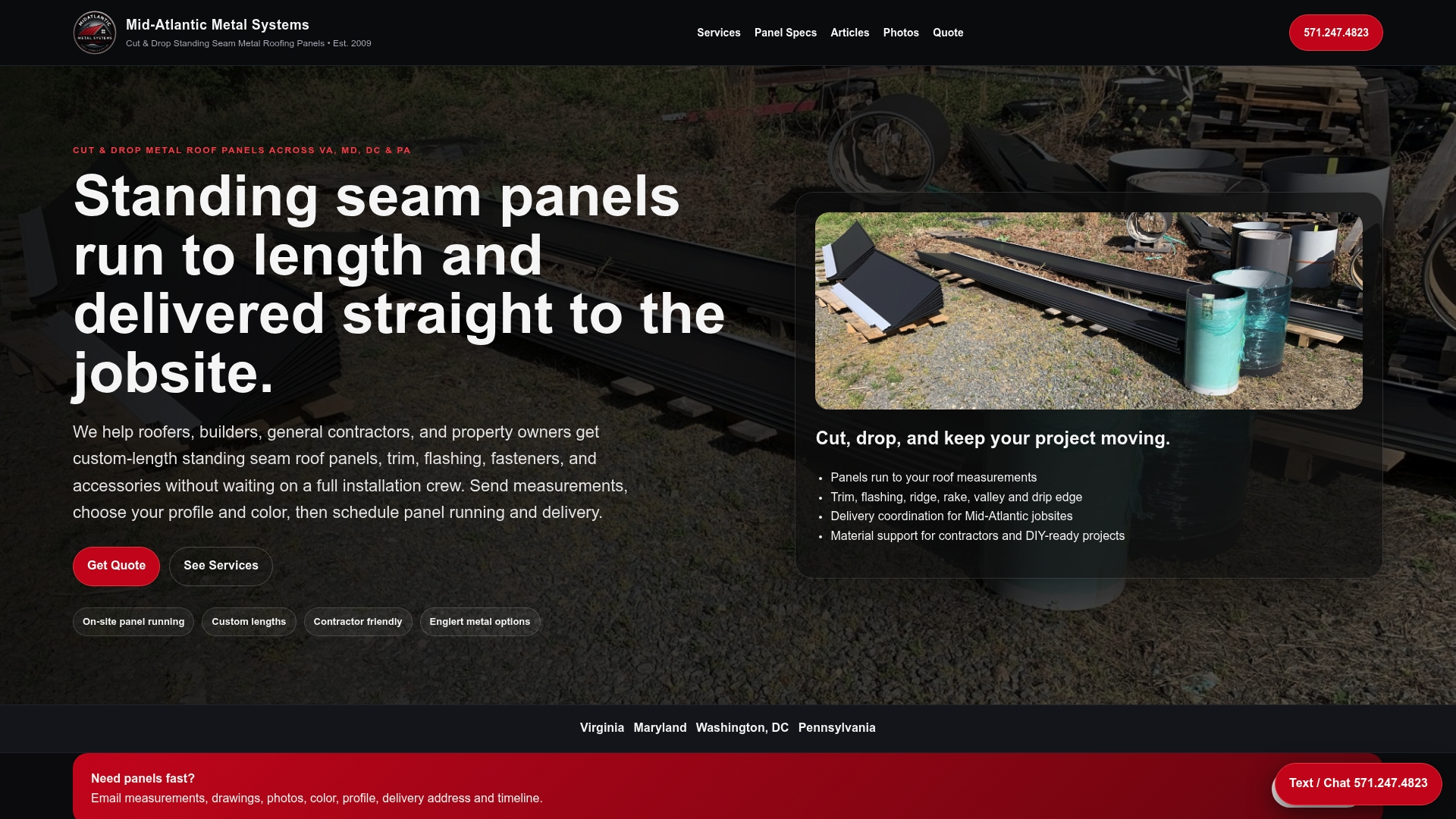
We also supply coordinated trim and flashing packages so your receiving crew isn’t matching mismatched orders from separate vendors. For contractors and builders working across Virginia, Maryland, Washington DC, Pennsylvania, and West Virginia, you can review panel profiles and request a quote through our standing seam panel options page.
FAQ
What is the best app for delivering construction materials?
There’s no single standard app; most contractors use a shared delivery management system or a project management platform’s logistics module to track scheduled and completed deliveries. The right choice depends on what your team already uses for scheduling and whether it can expose delivery status to every trade on-site.
What does Curri deliver?
Curri operates as a same-day delivery service connecting construction suppliers and contractors with drivers for transporting materials and equipment. For architectural metal roofing panels specifically, contractors typically order directly through a panel supplier’s own cut-and-drop delivery service instead.
How do I decide whether to accept, quarantine, or reject a delivery?
Accept with a note when the load matches the purchase order with only minor, documented issues. Quarantine when damage or a discrepancy needs inspection before use, and reject outright when the quantity or items delivered don’t match the order at all.
Do OSHA rules apply to unloading deliveries at a construction site?
Yes, when a crane hoists palletized material for placement at height, that activity generally falls under construction crane standards, and powered industrial trucks used in loading and unloading carry their own host-employer safety duties. These obligations apply regardless of whether the equipment belongs to the site or the delivery vendor.
How long should I keep delivery records and photos?
Keep signed delivery tickets, photos, and any quarantine or rejection notes for the duration of the project at minimum, since disputes over shortages or damage can surface well after the material is installed. Many contractors retain these records alongside other project documentation for warranty and liability purposes.
Sources
- AGC EDGE Field Logistics and Workflow Planning Workshop | Associated General Contractors of America
- Modernizing the supply chain and increasing the value of AWP | Construction Industry Institute
- Whether unloading a pallet suspended by a crane is considered construction. | Occupational Safety and Health Administration