Contractor Playbook for Staged Roofing Delivery Within 24–48 Hours
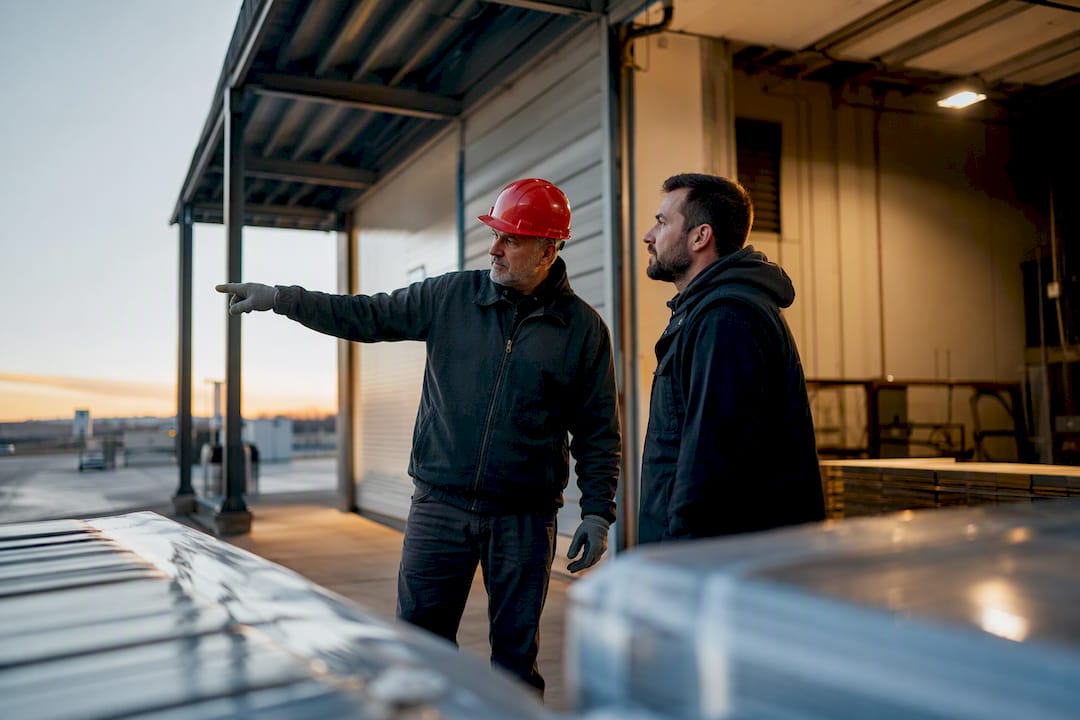
Contractor playbook for staged roofing delivery. Schedule materials within 24–48 hours, follow a tight delivery checklist, and require sequenced,...
Materials for a reroof are usually delivered and staged before the crew arrives, and the rule that matters most is simple: align delivery with installation. Get shingles or panels on site the same day work starts, or no later than 24 to 48 hours before, and assign one person to receive the load. Wait longer than that and you’re managing weather exposure, theft risk, and a driveway full of pallets nobody planned for.
TL;DR:
- Materials delivered 24 to 48 hours before installation help minimize weather exposure, theft, and storage issues, and require proactive confirmation of delivery details.
- Ground staging is suitable for single-story homes with accessible yards, while rooftop delivery needs proper equipment access, permits, and roof structural checks.
- Proper delivery day procedures include confirming load details, clearing access, assigning a responsible receiver, and documenting the load through photos and signed proof of delivery.
- Delays beyond 48 hours increase risks of material damage from UV and moisture degradation, especially for asphalt shingles, unless protective measures are used.
- Contractor-focused services like custom-length panels and on-site roll forming reduce staging time, waste, and logistical complexity, supporting faster, more organized roofing projects.
Table of Contents
- What Is Staged Roofing Delivery and When Should Materials Arrive?
- Ground Staging or Rooftop Delivery: Which Placement Method Fits Your Job?
- What Should Be on Your Delivery Day Checklist?
- How Long Can Roofing Materials Sit Before They’re Damaged?
- How Do You Document Delivery and Avoid Disputes?
- How Contractor-Focused Supply Services Cut Staging Risk
- Who Handles What on Delivery Day?
- Get Staged Delivery Right From the First Truck
- Sources
- FAQ
What Is Staged Roofing Delivery and When Should Materials Arrive?
Staged roofing delivery means materials show up at the jobsite ahead of the crew, positioned and sequenced so installation can start without waiting on a truck. Suppliers plan it this way because routing, production schedules, and just-in-time staging rarely line up perfectly with a crew’s exact start time.
Three timing patterns show up most often on real jobs:
- Same-day delivery: the truck arrives right before or as the crew starts, minimizing exposure time.
- 24 to 48 hours ahead: the window most logistics guides for roofing staging treat as ideal, giving crews a buffer without leaving material sitting for days.
- Longer lead times: sometimes unavoidable when a supplier is juggling multiple projects or a specific product is backordered.
Deliveries that arrive too early risk exposure and clutter. Late deliveries can stall crews already at work, resulting in unproductive labor hours. Third-party logistics analysis shows that well-planned direct jobsite delivery cuts crew pickup time and labor cost compared with sending someone to fetch materials from a supply yard.
Ground Staging or Rooftop Delivery: Which Placement Method Fits Your Job?
The right placement method depends on the roof pitch, the yard, and how many stories you’re dealing with. Getting this wrong means paying for re-handling later.
- Manual ground staging: works for single-story homes with clear yard access and lighter material loads.
- Forklift placement: speeds up ground staging on larger jobs with pallet counts too heavy to hand-carry.
- Conveyor delivery: lifts shingles or panels to roof level without a crane, common on standard residential jobs.
- Boom truck or crane: necessary for multi-story buildings, tight urban lots, or narrow side yards where a conveyor can’t reach.
Rooftop delivery saves crews from carrying every bundle up a ladder, but it comes with strings attached. You need equipment access wide enough for a boom truck, sometimes a permit depending on the municipality, and a structural check confirming the roof can carry the staged load without deflecting. Practical guidance on rooftop shingle delivery is blunt about this: improper pallet placement can cause real deck damage. When rooftop placement isn’t practical, ground staging in a dedicated drop zone, close to the house but clear of the work path, is the safer default.
What Should Be on Your Delivery Day Checklist?
A staging checklist prevents the two most common failures on delivery day: materials in the wrong spot, and nobody there to check them in.
- Confirm the delivery time, driver contact number, product codes, and pallet count 24 to 48 hours ahead of the truck’s arrival.
- Clear the driveway and any path the delivery vehicle needs, and rope off landscaping that’s easy to crush with a loaded pallet jack.
- Set up a small “today” bin for flashing, fasteners, and other loose parts that shouldn’t get buried under bundles.
- Assign one receiver, contractor lead or homeowner, whose job is to be present when the truck pulls in.
- Count everything against the packing slip, photograph the load, record the driver’s name, and note any visible damage before the truck leaves.
That last step matters more than most people realize. Staging guidance for roofing supply operations recommends separating materials by install sequence right at drop off, so the crew isn’t digging through the wrong pallet on day one.
Pro Tip: Stage materials in reverse order of use. If ridge caps go on last, they should sit on top of the pile, not buried under three layers of field shingles the crew needs first.
How Long Can Roofing Materials Sit Before They’re Damaged?
Shingles and underlayment left exposed too long start to lose performance before they’re even nailed down. Industry guidance points to a specific window for a reason: install within 24 to 48 hours of delivery, ideally same-day, to limit UV exposure, moisture intrusion, and adhesive degradation that weakens the seal strip on asphalt shingles.
When a delay is unavoidable, protection tactics matter:
- Use breathable tarps, never plastic sheeting that traps condensation underneath.
- Keep pallets elevated off wet ground on blocks or pallets, not directly on soil or grass.
- Rotate stacked bundles if they’ll sit more than a couple of days, to even out sun exposure.
- Add sleepers or plywood under rooftop-staged loads to spread weight across rafters.
- Refuse rooftop placement outright if a storm system is inbound within 24 hours.
If a supplier can’t commit to a delivery window inside that 48 hour range, it’s often smarter to delay the drop entirely rather than accept material you’ll be babysitting on a tarp for a week.
How Do You Document Delivery and Avoid Disputes?
Confirm every delivery 24 to 48 hours in advance, and if multiple pallets are landing the same week, stagger the drops so the site doesn’t turn into a parking lot of unopened material.
Proof of delivery is the piece contractors skip most often, and it’s the one that saves arguments later. A solid record includes:
- A count matched against the packing slip, done in front of the driver.
- Photos of placement and condition, timestamped, before the driver leaves.
- A written sign-off from the driver noting any pre-existing damage.
Construction proof-of-delivery practices built around photo documentation and signed tickets consistently reduce disputes over what showed up and in what shape. Have a backup staging area identified in case the primary drop zone is blocked, and settle who eats the cost of a re-delivery before the truck is scheduled, not after something goes wrong.
How Contractor-Focused Supply Services Cut Staging Risk
Custom-length panels change the staging equation entirely. Cut-and-drop delivery means panels arrive already sized for the job, which cuts down on the leftover cut-offs and scrap that pile up when contractors are field-trimming stock lengths.
On-site roll forming pushes that further: panels get formed right at the jobsite in the exact lengths needed, which shortens the staging window because there’s no long-panel transport logistics to plan around. Pairing that with a coordinated trim and fastener package means fewer separate deliveries to track.
Contractors should hold suppliers to a few standards on this front:
- Confirmed delivery windows with a named contact, not a vague “sometime this week.”
- Materials sequenced for install order, not dumped in one pile.
- Protective packaging that survives the trip and the wait.
- Written delivery documentation handed over at drop off.
— Matt Catino
Who Handles What on Delivery Day?
Delivery day runs smoothly when responsibilities are clear before the truck shows up, not sorted out in the driveway.
The contractor owns the staging plan: where materials land, whether crew is ready to start immediately, and confirming the load distribution won’t overstress the roof deck, a crucial aspect detailed in the role of contractor project management explained. The homeowner’s job is smaller but still matters: keep vehicles out of the drop zone, clear access points, and handle any HOA notification the neighborhood requires.
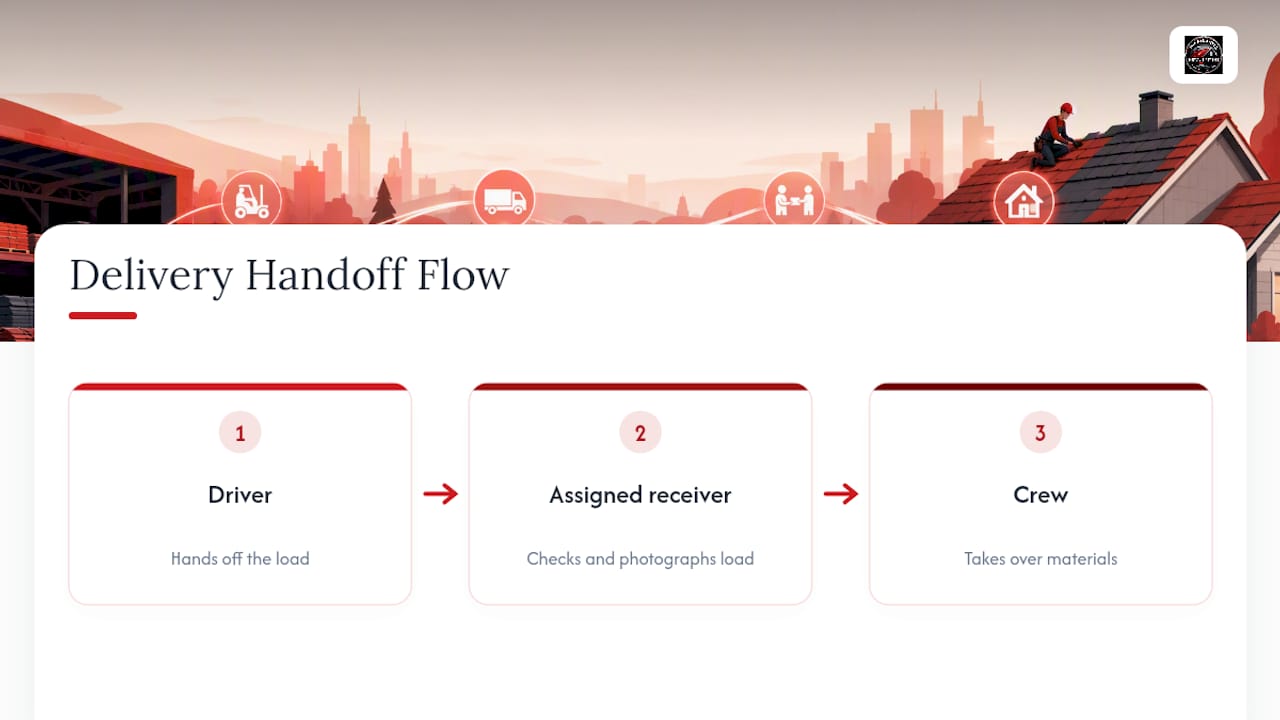
The handoff itself should be simple. Driver hands off to the assigned receiver, receiver checks and photographs the load, then the crew takes over. Skip a step and you’re the one explaining a shortage three days into the job.
Get Staged Delivery Right From the First Truck
Getting materials to the jobsite in the right sequence, on the right day, is only half the job. The other half is not having to think about it. That’s the gap contractor-focused suppliers close for contractors across the Mid-Atlantic region: custom-length panels built to the exact run needed, delivered ready to install instead of stock lengths requiring on-site cutting and re-handling.
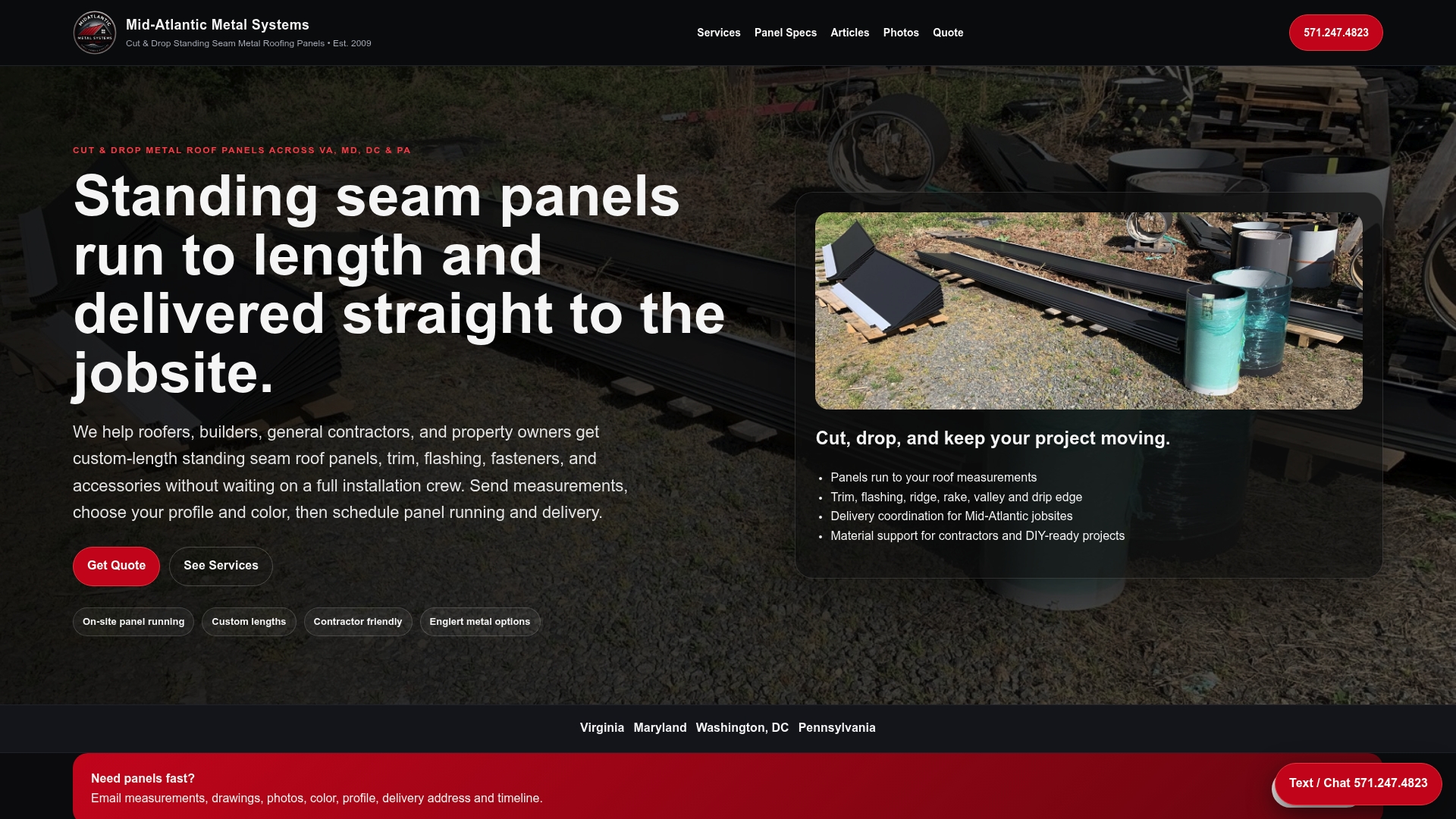
Our cut-and-drop delivery service fabricates 1 inch mechanical lock and 1.5 inch snap lock standing seam panels to your exact takeoff, so there’s no field-trimming waste sitting around the staging area. For projects where transporting long panels isn’t practical, on-site roll forming fabricates the run right at the jobsite. Add a coordinated trim and flashing package and you’ve cut the number of separate deliveries you’re tracking down to one. Reach out through our contractor supply page to get a delivery window built around your crew’s actual start date.
Sources
- How do professional roofers handle material logistics for large projects?
- Roofing logistics & material staging guide
- Shingles delivered to roof: a practical guide for safe delivery and storage
FAQ
What Is the 25% Rule for Roofing?
The 25% rule refers to a common building-code trigger where replacing 25% or more of a roof’s surface can require the entire roof to meet current code, not just the repaired section. Rules vary by jurisdiction, so check with your local building department before assuming it applies to your project.
How Can You Tell if a Roofer Is Cutting Corners on Delivery?
Watch for vague delivery windows, no packing slip or count at drop off, and pallets dumped without regard to install sequence. A contractor who confirms delivery details 24 to 48 hours ahead and documents the load with photos, following proof-of-delivery practices, is running a tighter operation.
How Much Should a 1,200 Square Foot Roof Cost?
Cost depends heavily on material choice, roof pitch, and local labor rates, so there’s no single number that holds nationwide. Asphalt shingle jobs and metal panel jobs land in very different price ranges, and getting an accurate figure means requesting a quote based on your specific roof.
Does a Big Box Home Improvement Store Offer Rooftop Delivery?
Some large retailers offer delivery to the driveway but not rooftop placement, which shifts the carrying labor onto the crew. Contractor-focused suppliers, including MidAtlantic Metal Systems, typically coordinate placement method directly with the job’s access and structural needs rather than offering one fixed delivery option.
How Long Can Roofing Materials Sit Before Installation?
The safe window is same-day installation or within 24 to 48 hours of delivery, based on industry exposure guidance. Beyond that, UV exposure and moisture start affecting material performance, especially adhesive seal strips on shingles.